Universal Nose Pad
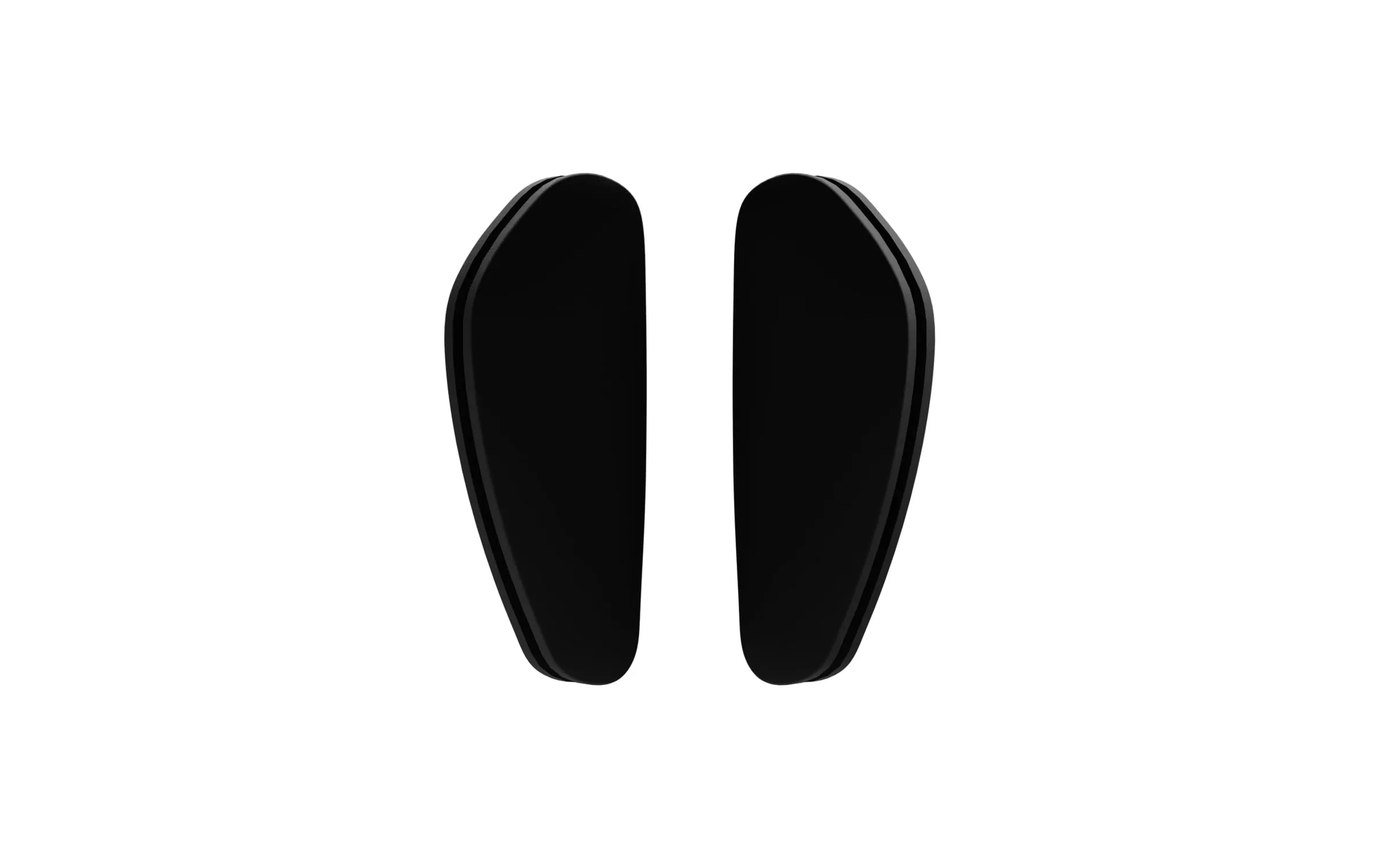
A replaceable nose pad system for Bex eyewear
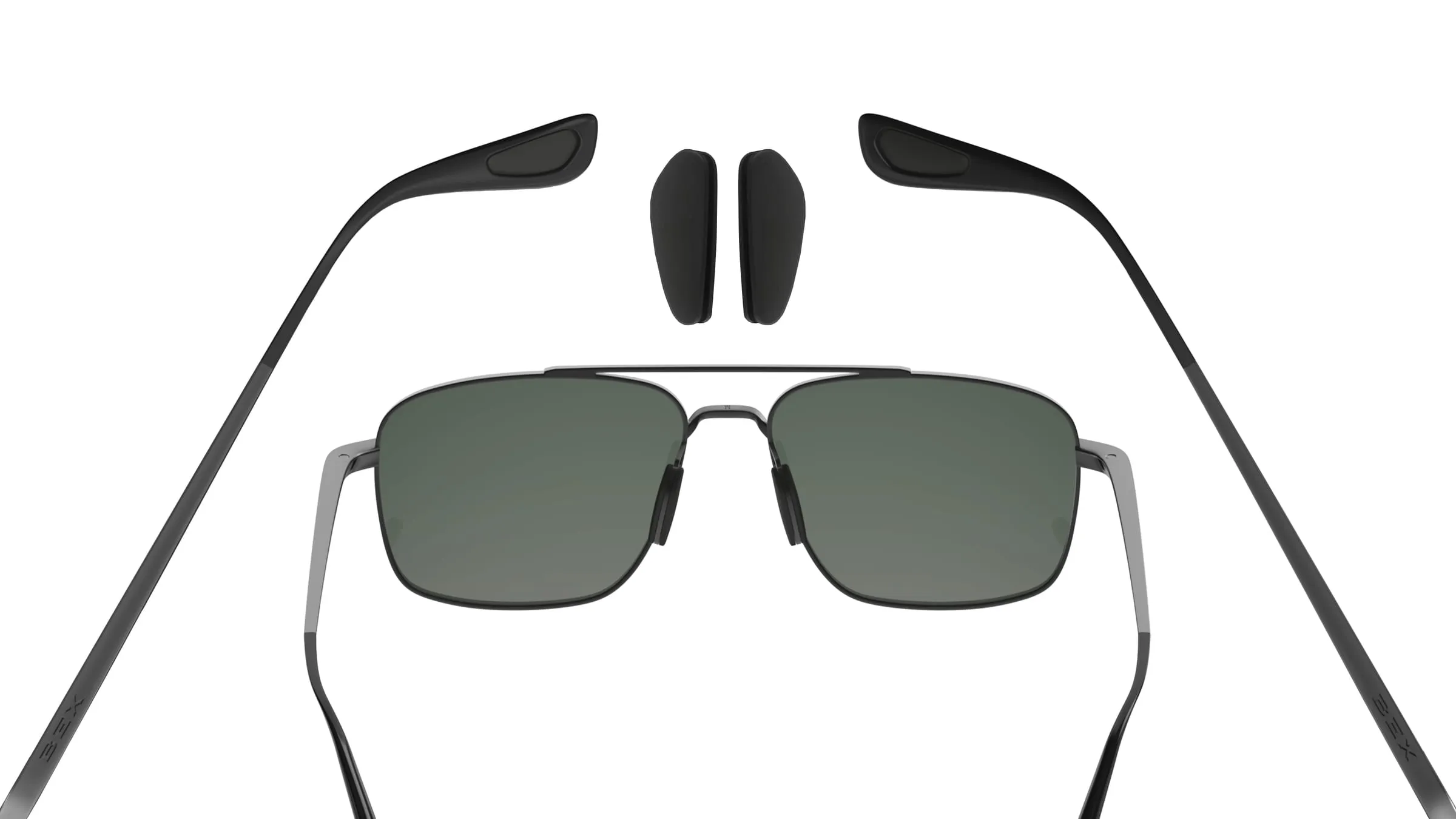
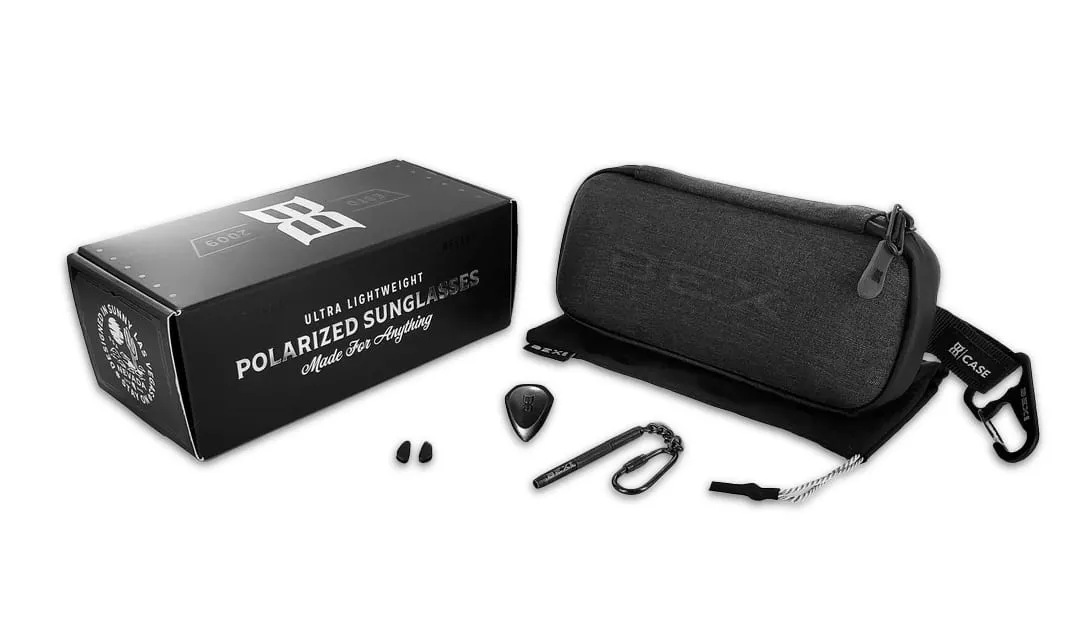
One nose pad made to work across Bex frames, plus the leash, tool and temple tips that go with it.
The problem
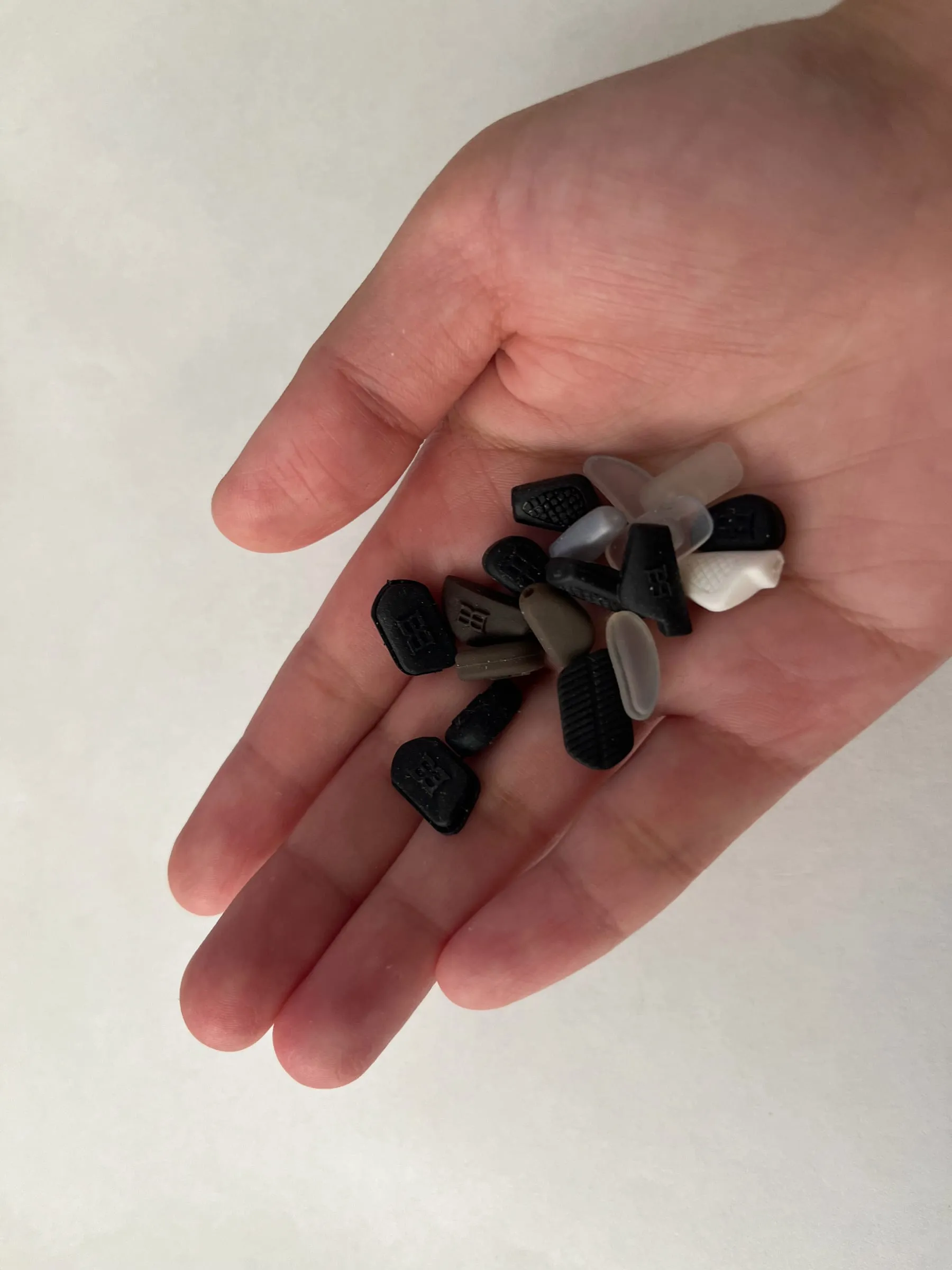
This started with broken and missing nose pads showing up in warranty claims. For 12 years, Bex had used stock nose pads. When customer service added up the claims, about 40% came down to a nose pad issue. The rubber wore out quickly and ripped through the barbs holding it. Pads were easy to lose. The replacements in the box were hard to fit, and they wore out too.
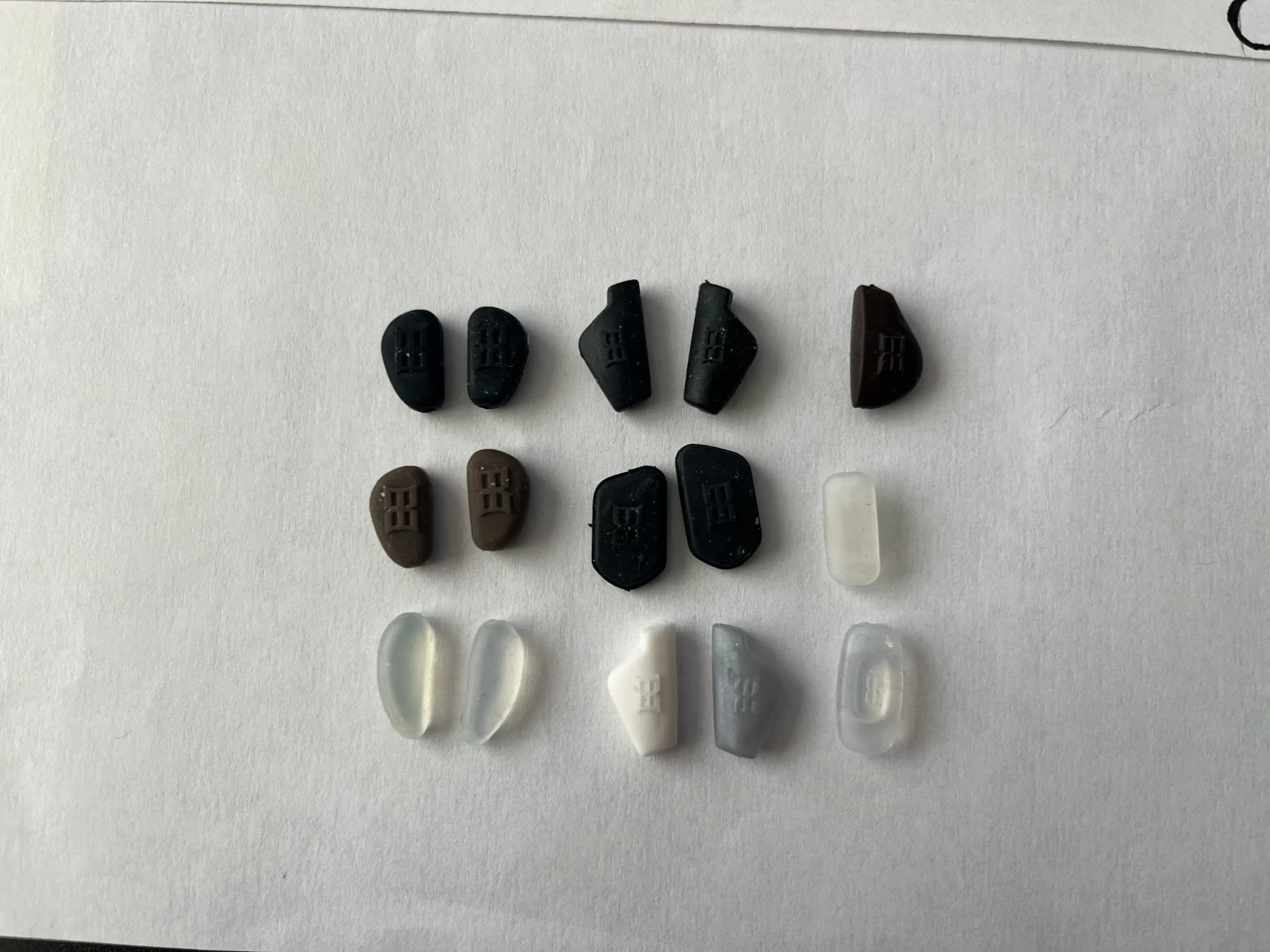
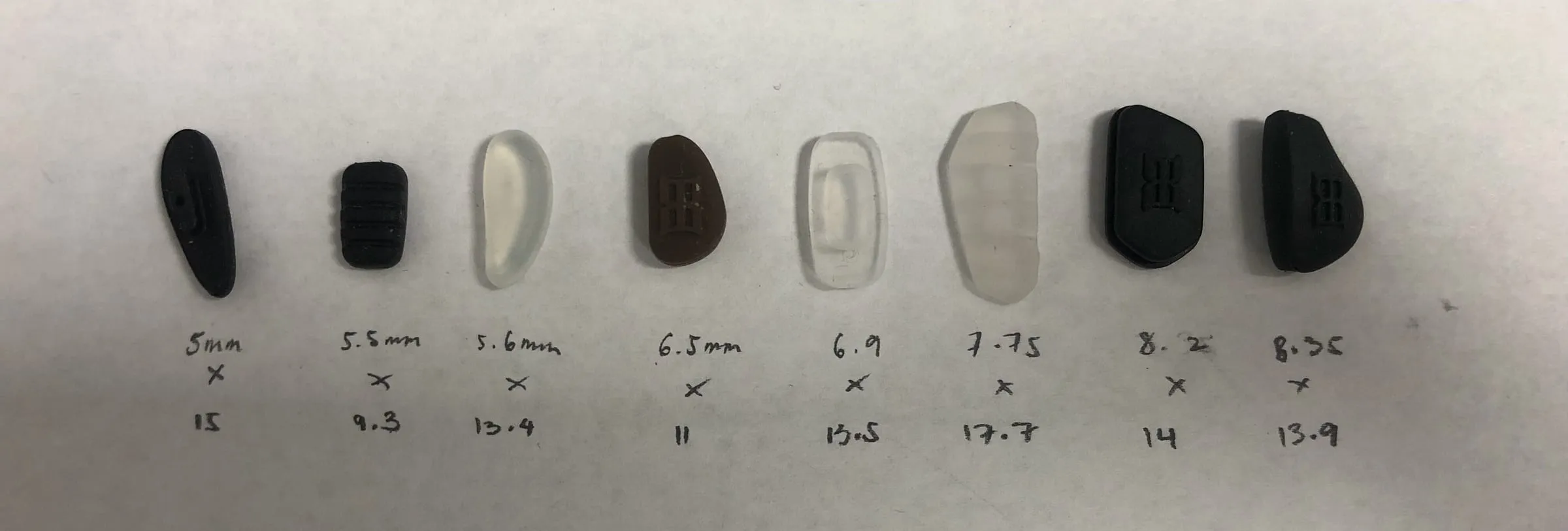
Why not just send out new pads? Over the years, different styles (and different SKUs within a style) had each ended up with their own nose pads. Customer service had boxes and boxes of repair kits, labeled by model. It was inconsistent, and costly to make, store, package and ship. To keep customers happy, they’d started sending brand-new pairs instead, which was also very costly.
In short, Bex had too many different nose pads, all of them stock parts. We set out to design one specifically for Bex, and to get by with as few versions as possible.
Can a universal pad be inclusive?
I came to Bex from a job where design was about the customer: interviewing people to understand their experience, and finding solutions from deep empathy. Faces come in very different shapes, so any “universal” part has biases that won’t serve some people well. I questioned how well I could take on a project that seemed to go against what I’d learned. But it was also incredibly exciting. I get to invent!
Can the left and the right be the same part?
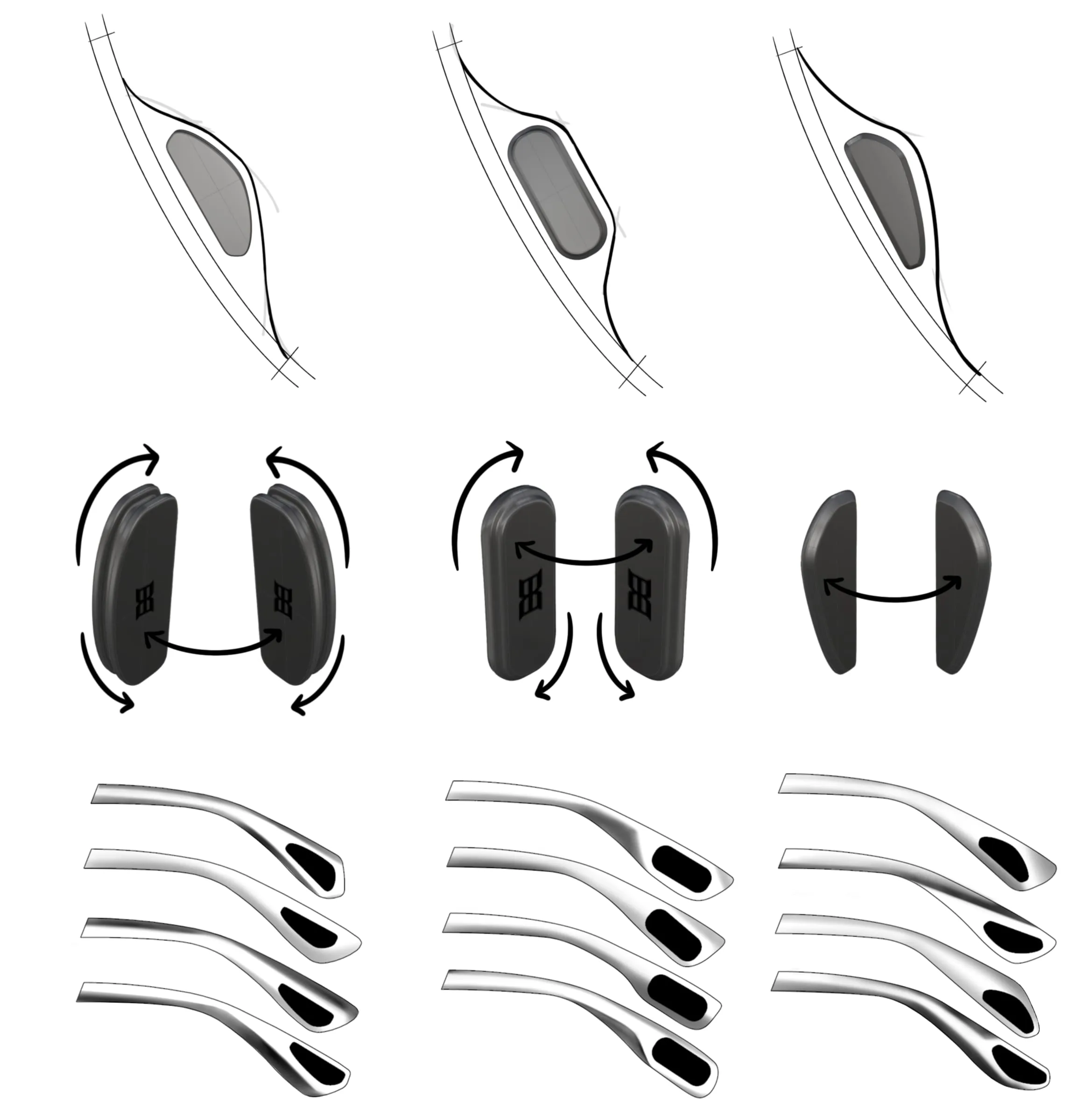
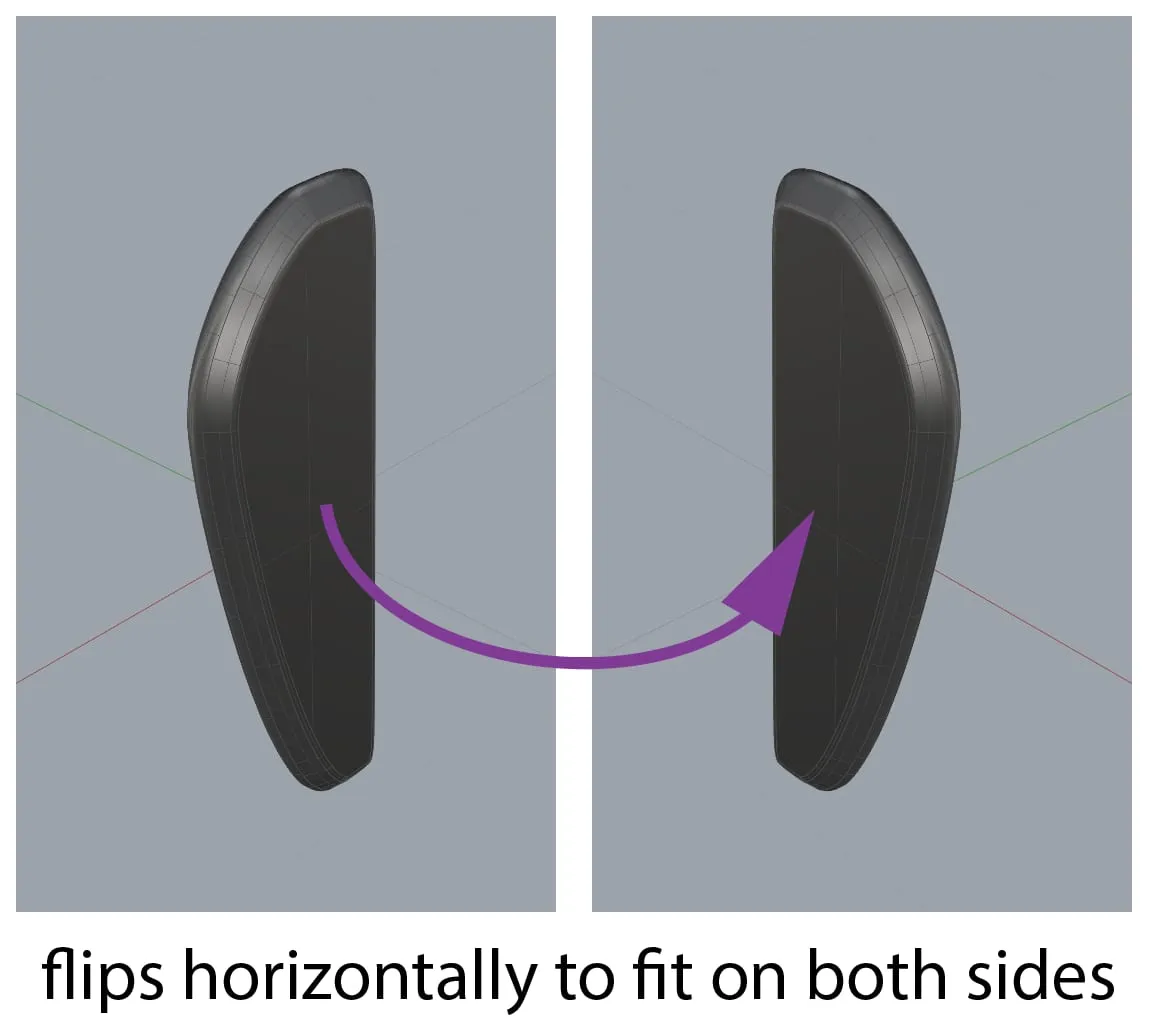
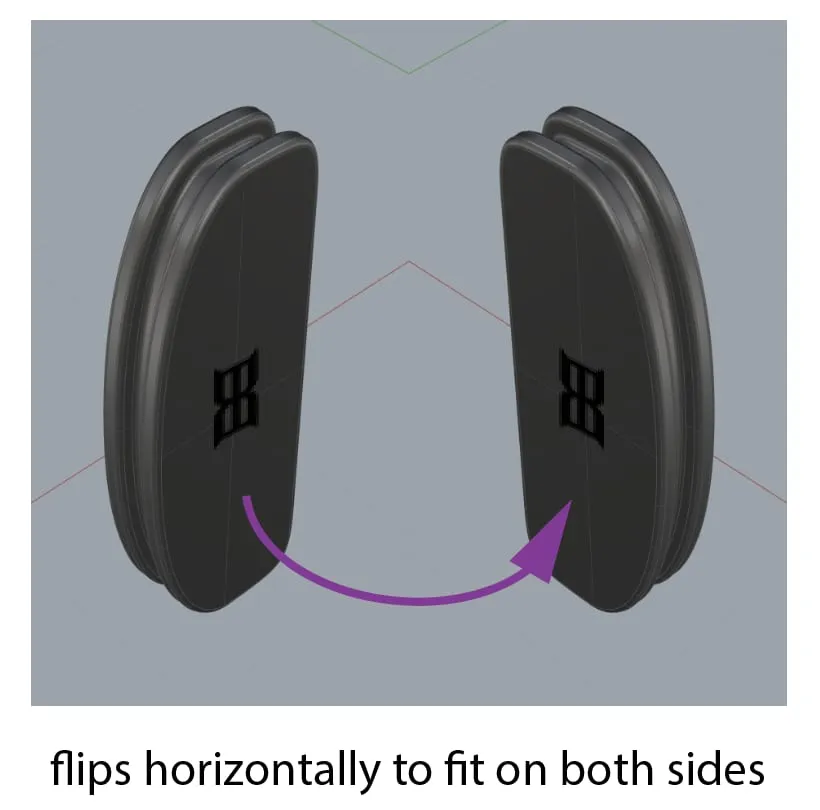
Faces are generally symmetrical, but some of Bex’s nose pads had a set left and right. Sometimes that was because of branding on one side, so flipping the pad would mean branding your nose every time you wore your glasses. Other times, the barb only attached to the pad one way. I was curious what a symmetrical pad would look like, one you could flip or rotate so the left and right are the same part. In theory, that cuts the number of parts in half.
How universal is “universal”?
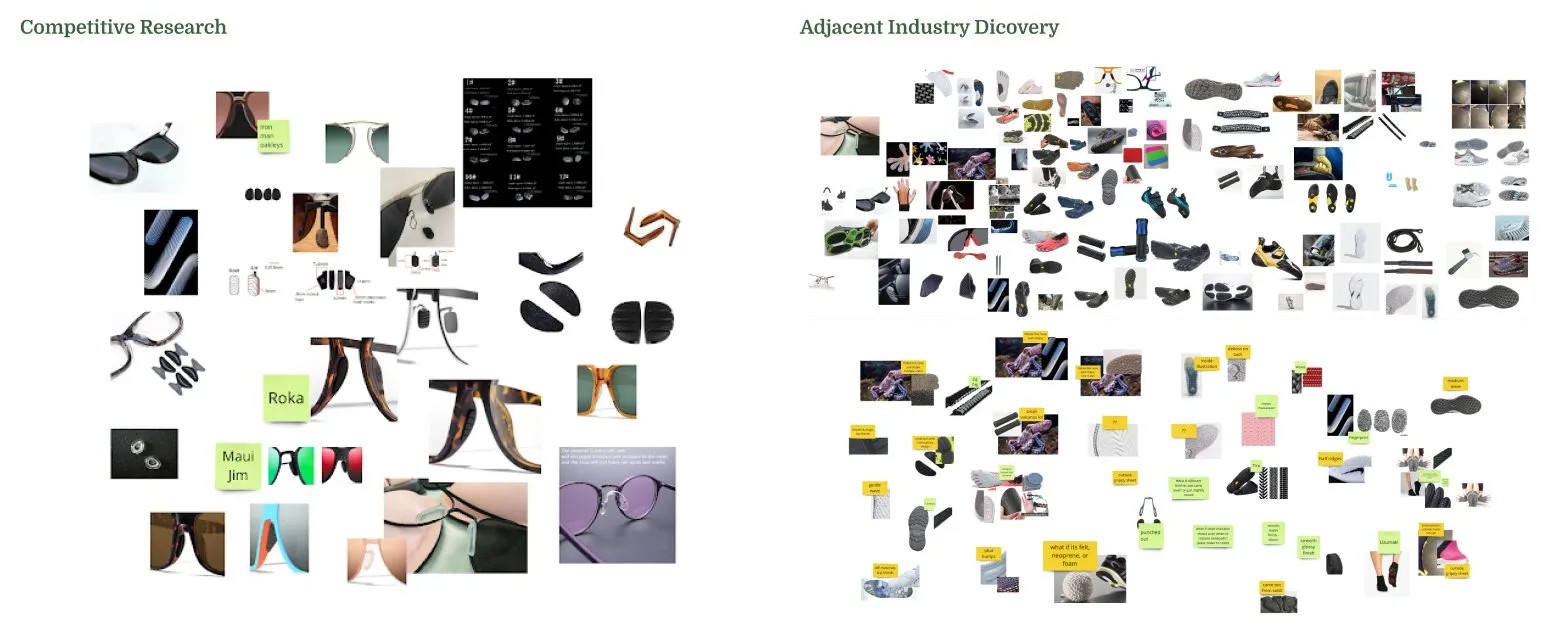
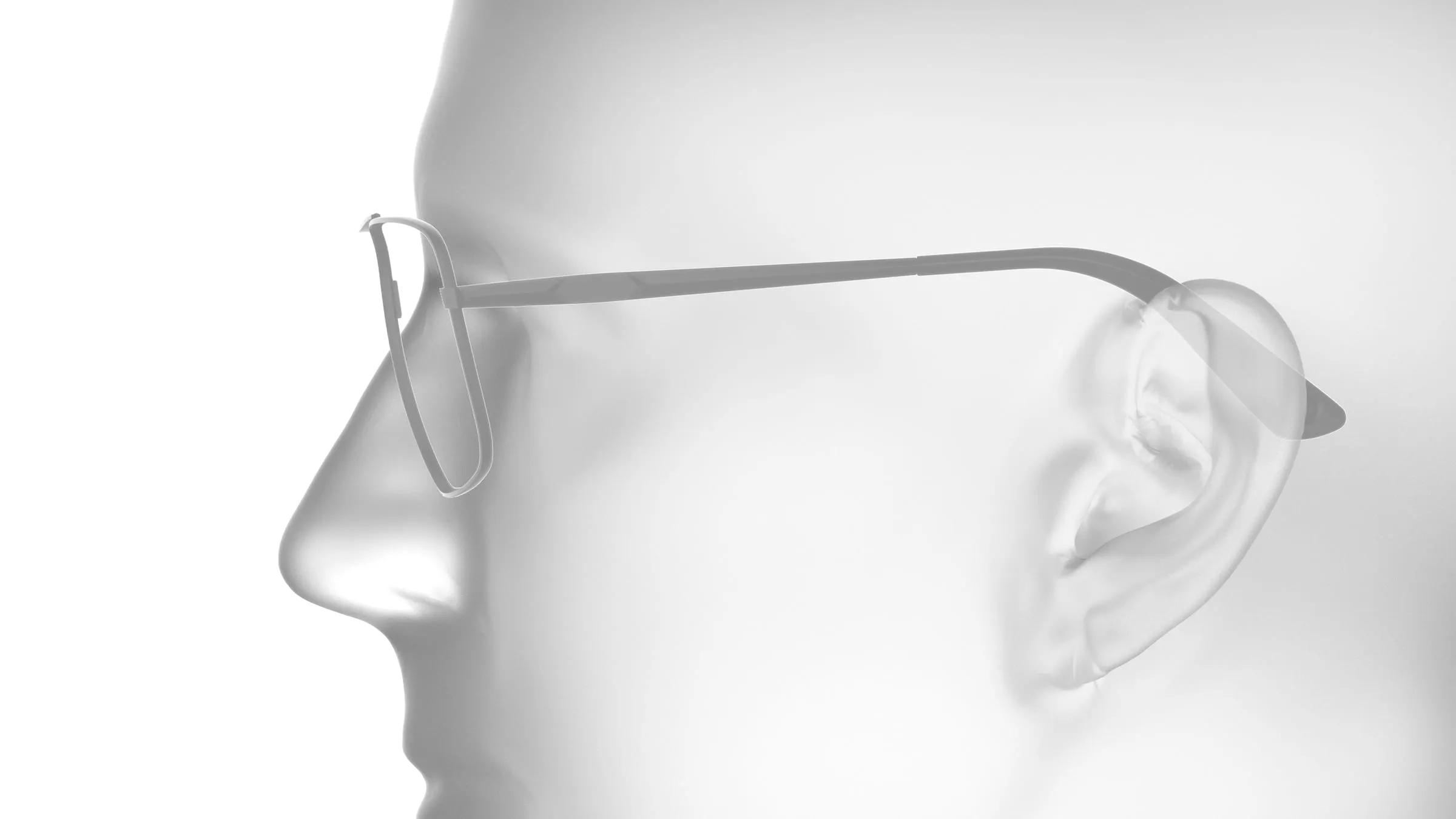
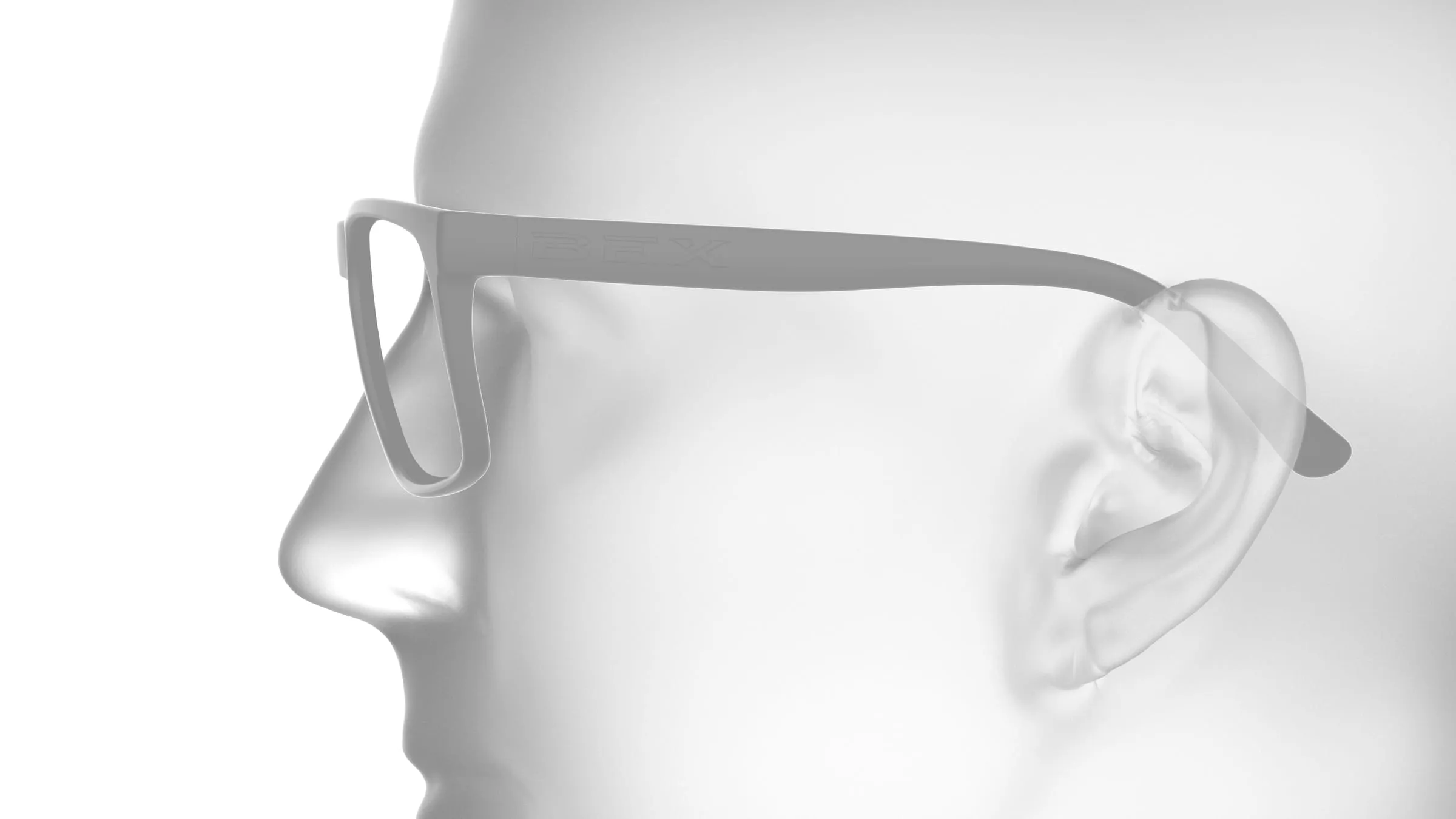
If one part could work for left and right, could it also work across different frames? The design team was split by frame type at the time, and I was in charge of metal eyewear and peripherals. I looked at all the eyewear we had, plus products in progress and the competition. One idea was to split the nose pads the way we split our work, with one each for metal, molded plastic, rimless, and maybe sport frames. That’s 3–4 molds instead of 12+. Metal was easy to agree on: a metal barb with a rubber tip that slips on like a sock.
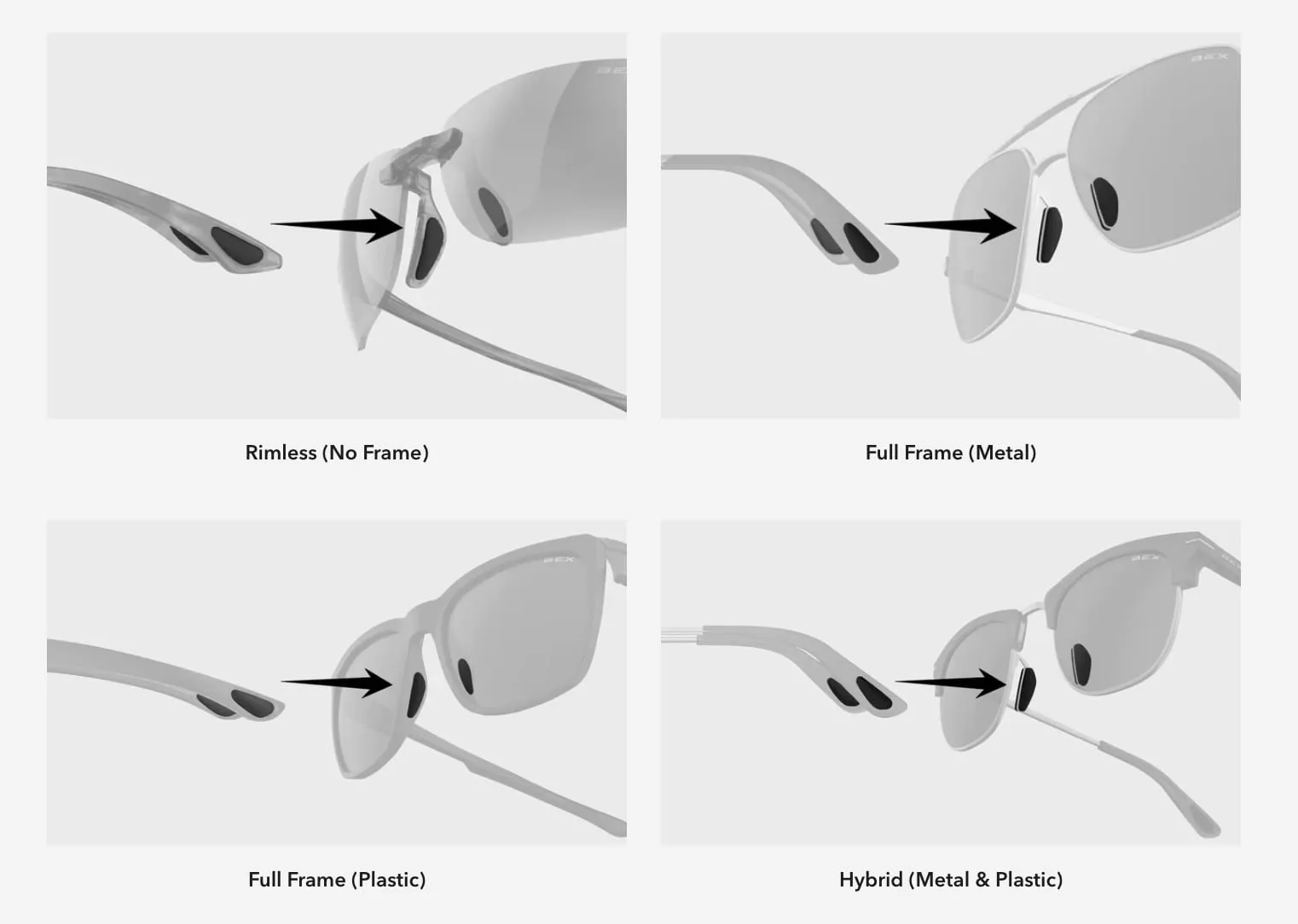
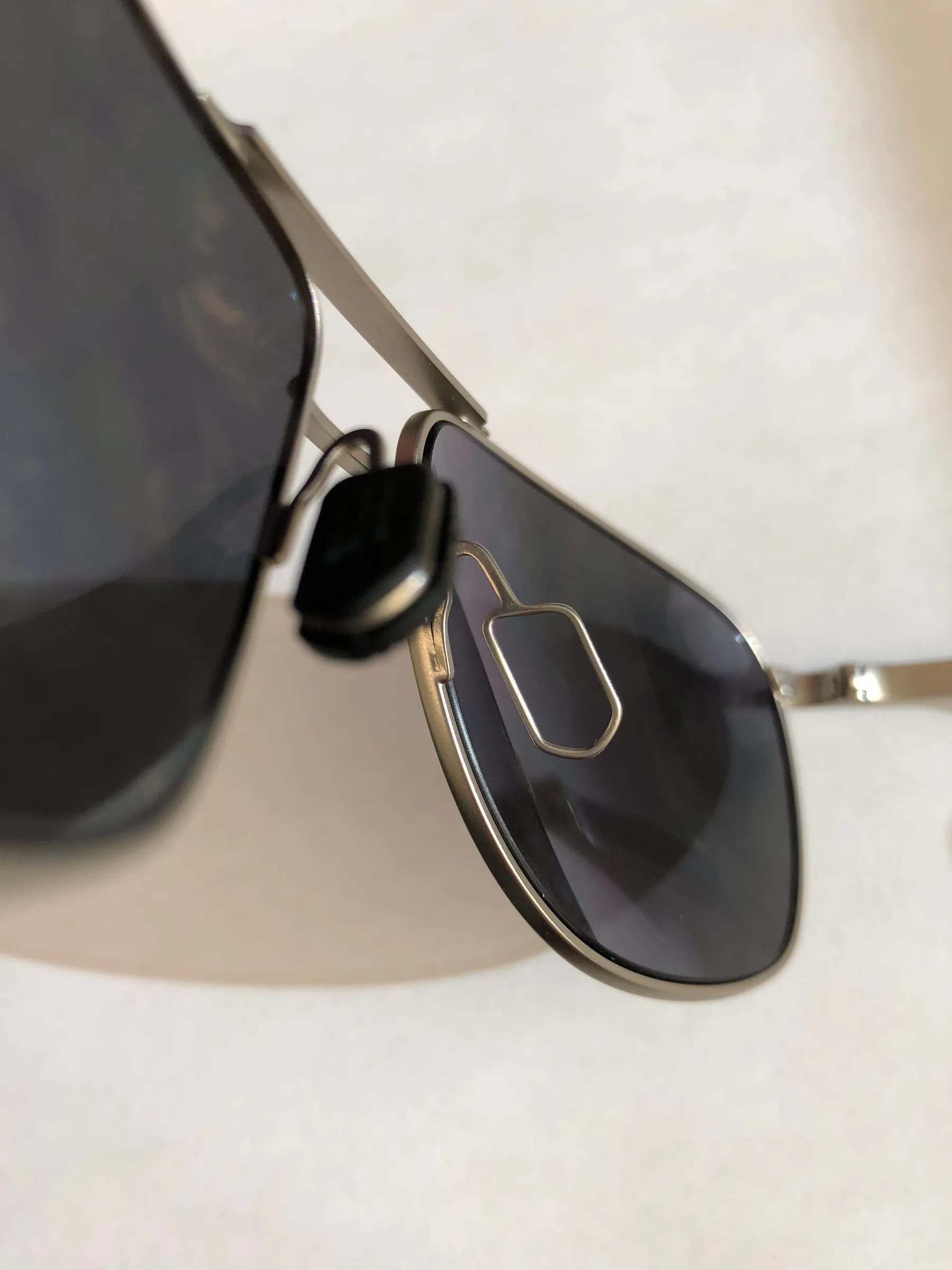
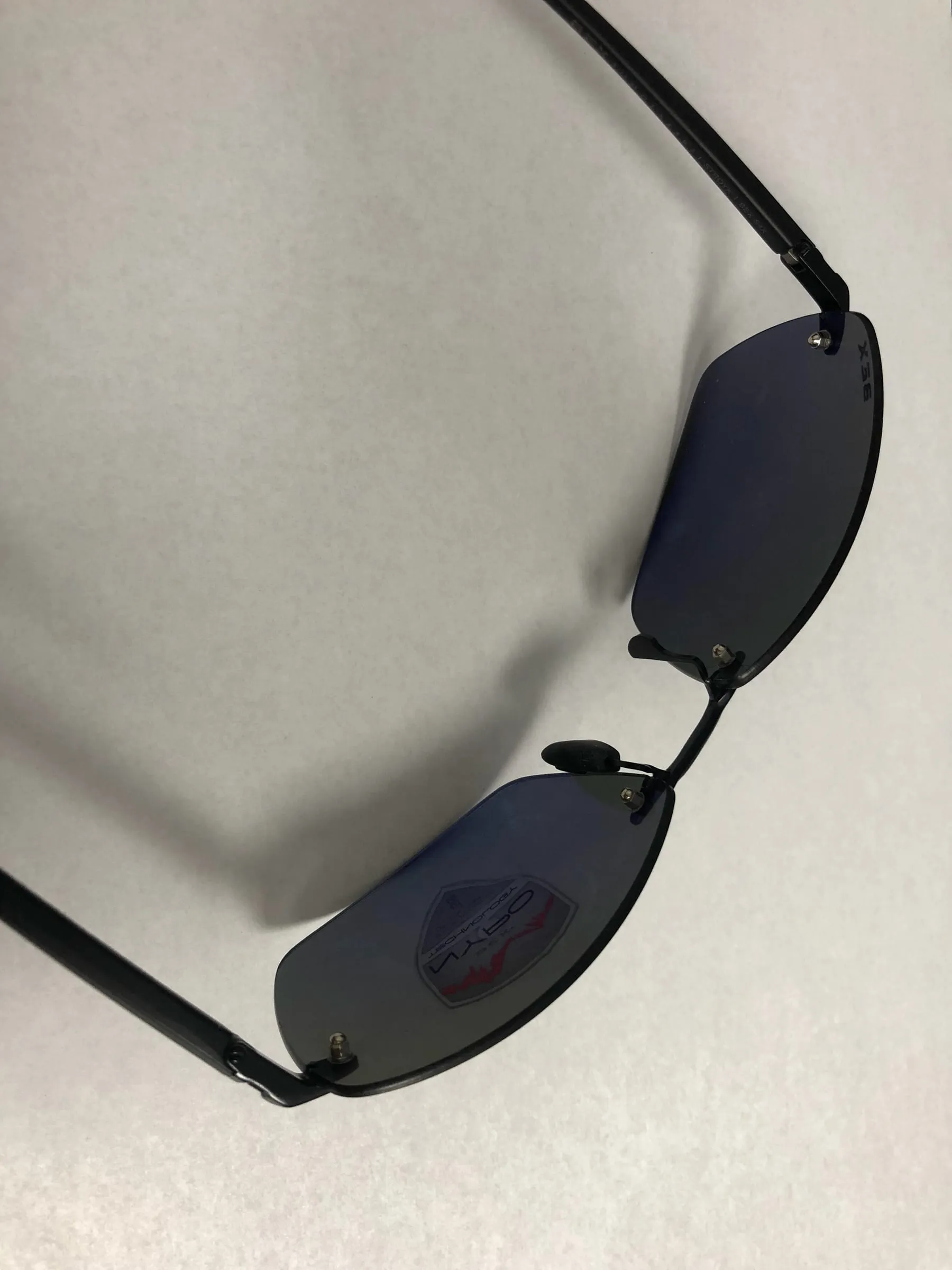
Then the director pushed it further: what about one nose pad for all the eyewear Bex would ever make? How could one pad fit all those types of frames? A metal barb can be thin, because metal wire is strong, while molded plastic has to be a certain thickness to be durable. The riddle was finding where those two meet. We looked at so many ways a rubber piece could insert into metal and plastic, including how other eyewear brands handle it. Some had interchangeable pads in different sizes, like AirPods ear tips, and even a little tool to remove them. The part of me trained in inclusive design loved that.
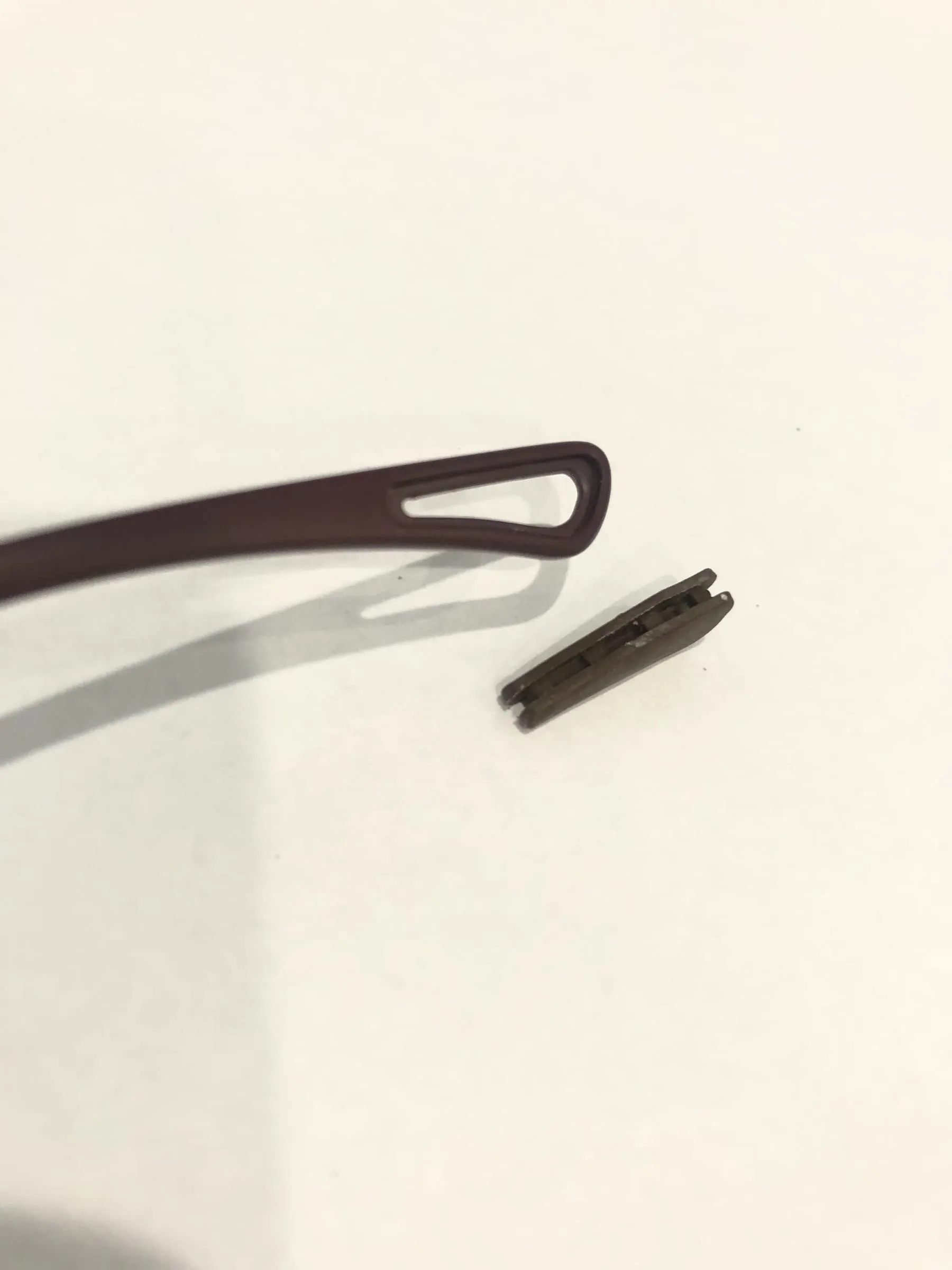
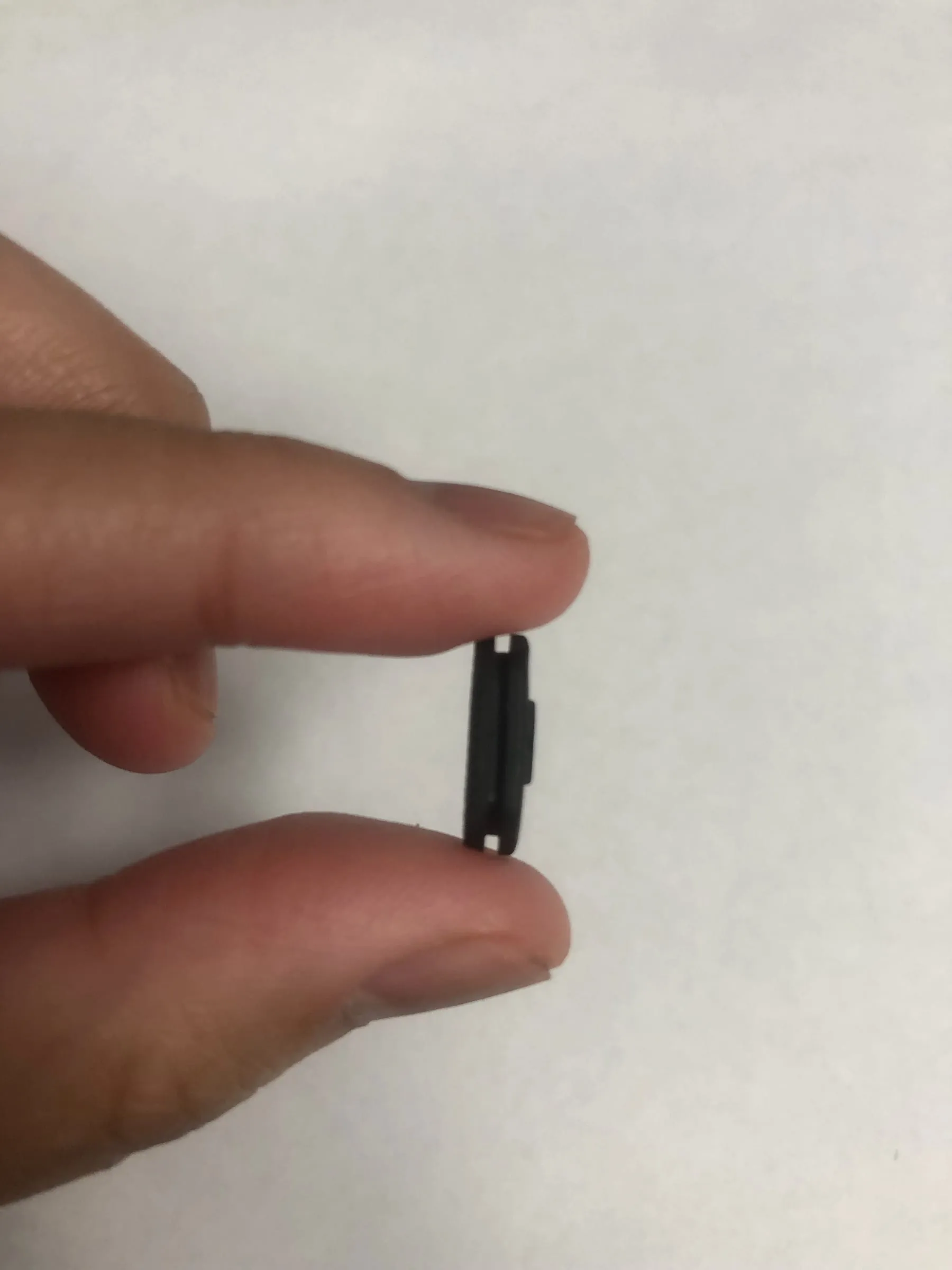
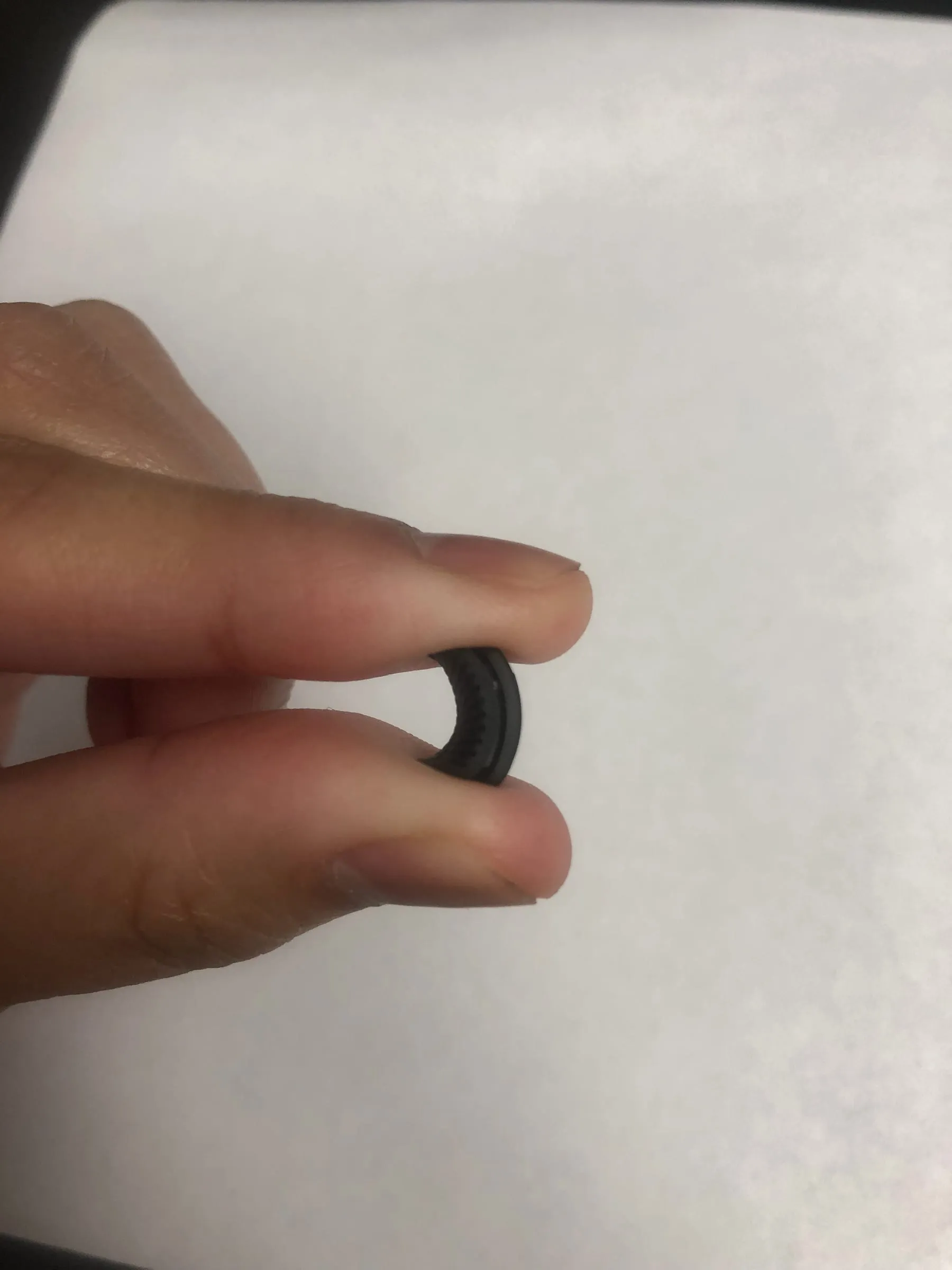
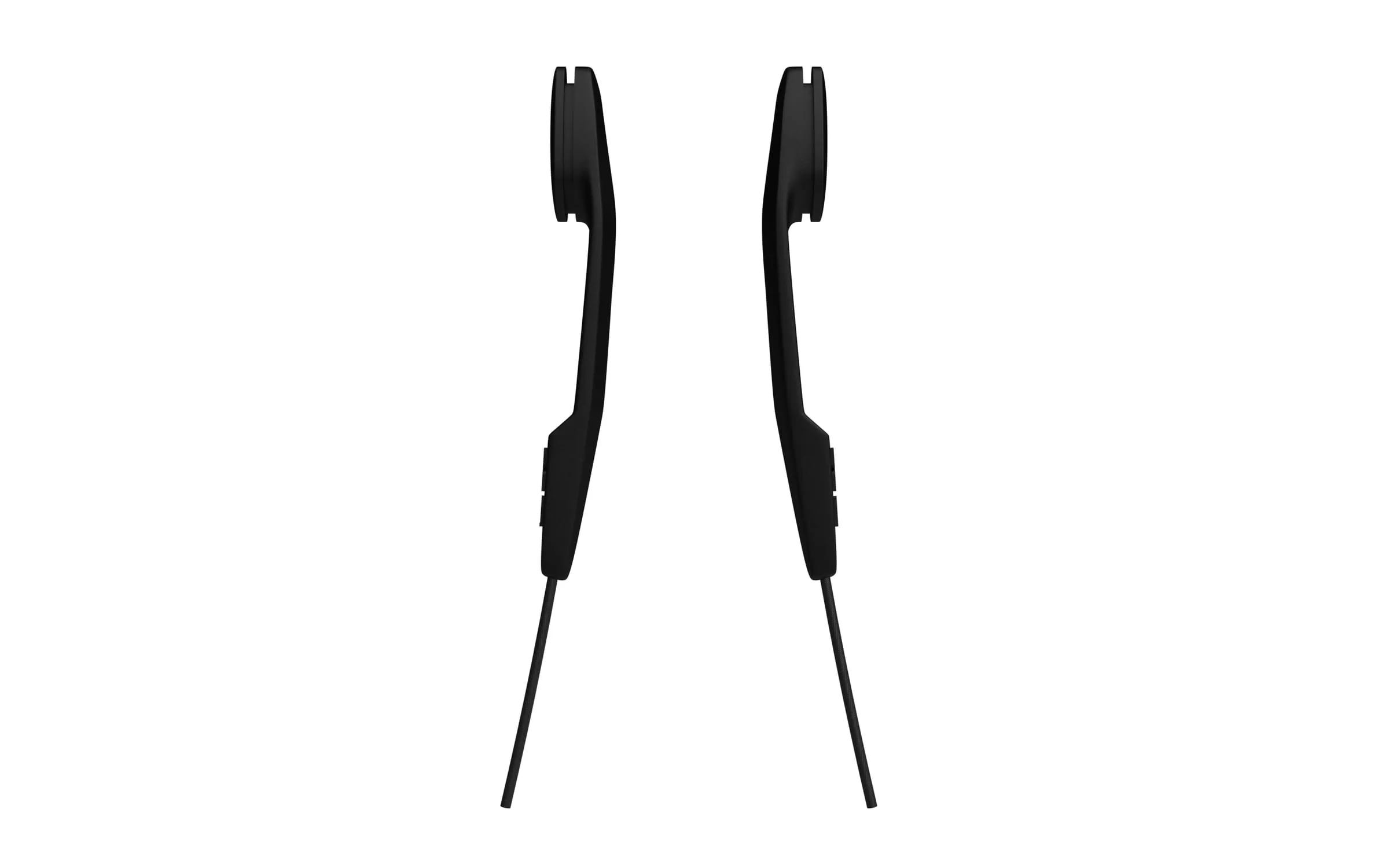
What worked for both materials was a rubber piece that pushes into a socket, similar to how some temple tips attach. Simple though it may be, that was the interaction we were looking for. Finally, we could talk to a manufacturing engineer about something we knew could be made.
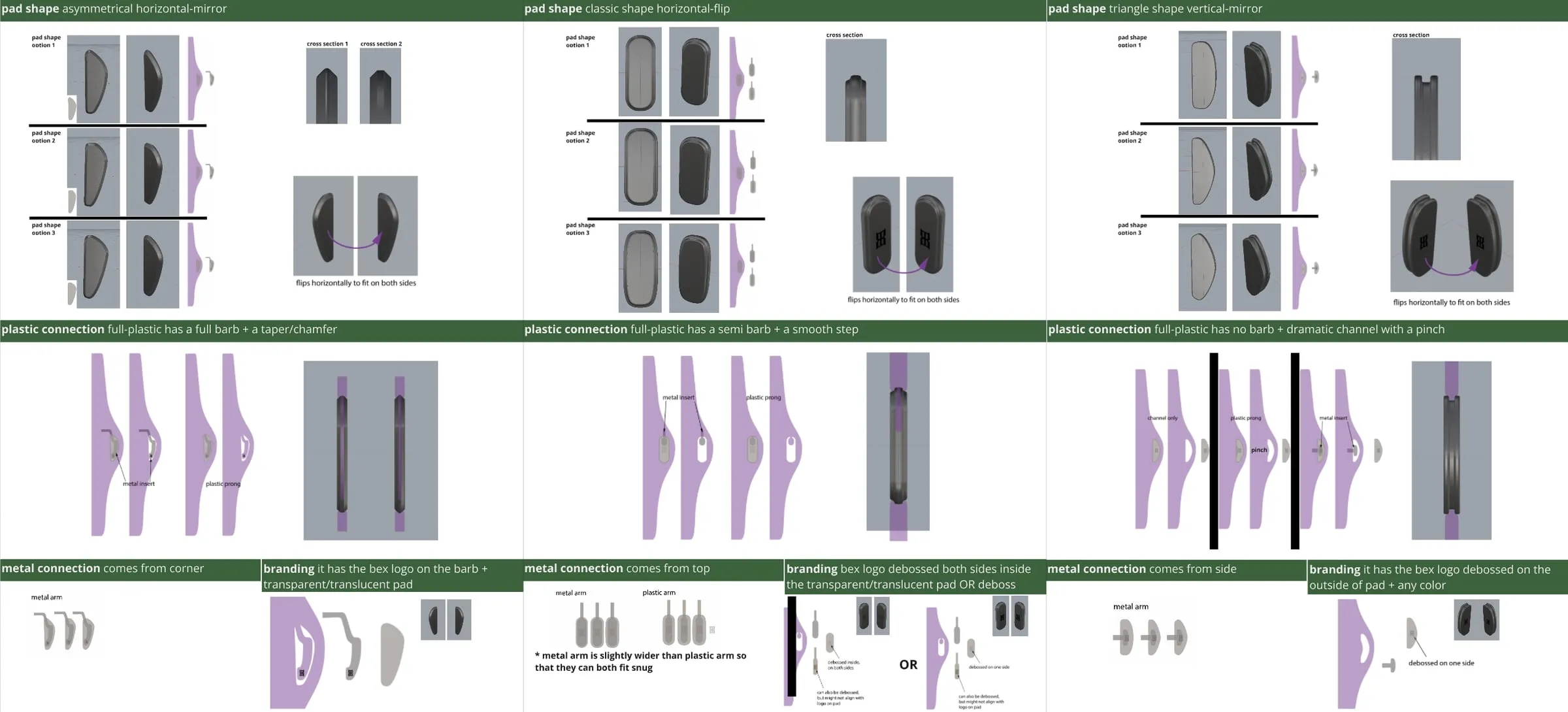
Why a triangle
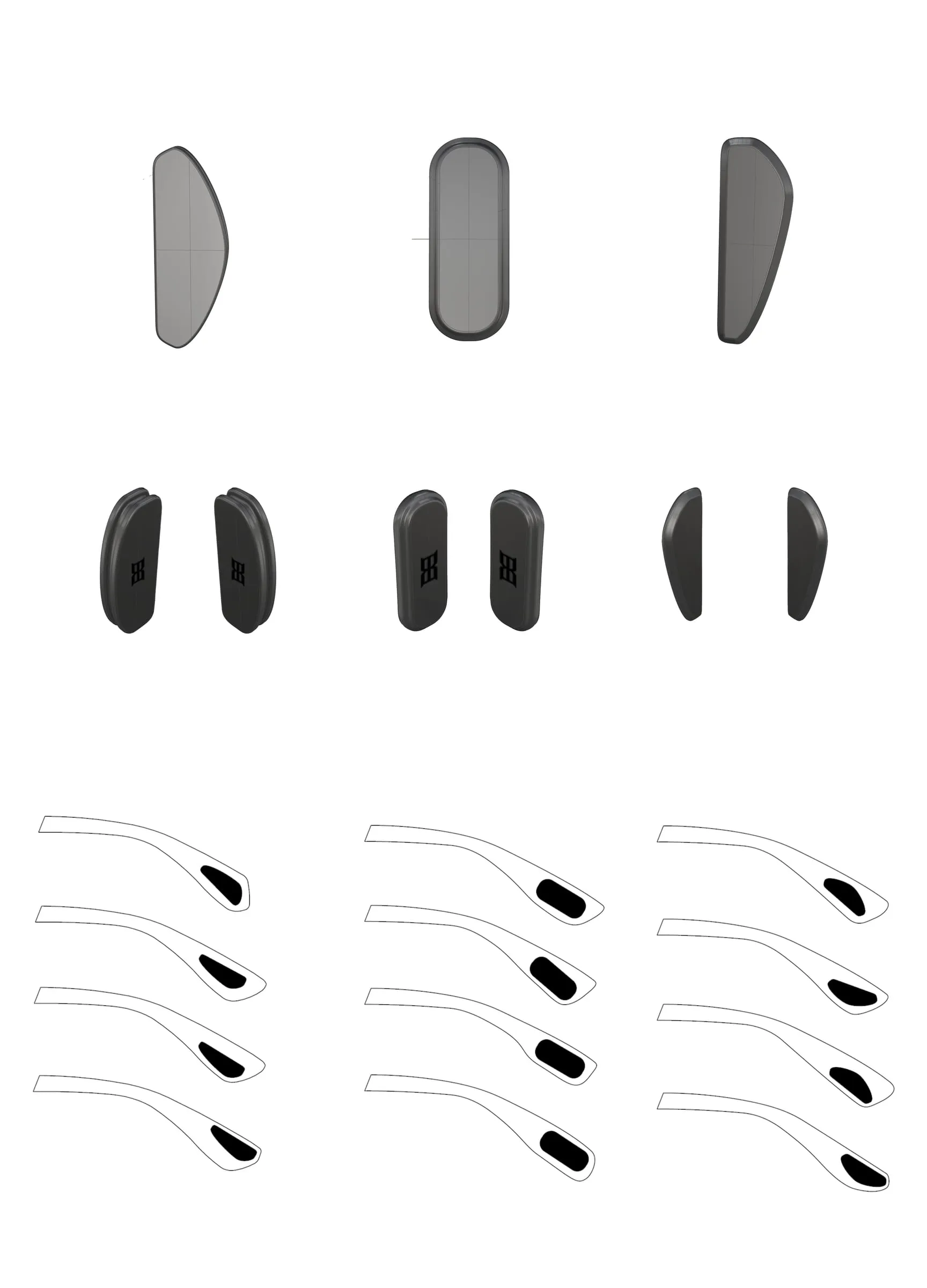
I explored a lot of shapes for the pad, checking in with my teammate on plastic eyewear along the way, and brought the best three to review. I chose a triangle because it was reminiscent of a nose seen from the side. In theory, that shape would give the pad a lot of surface touching the nose.
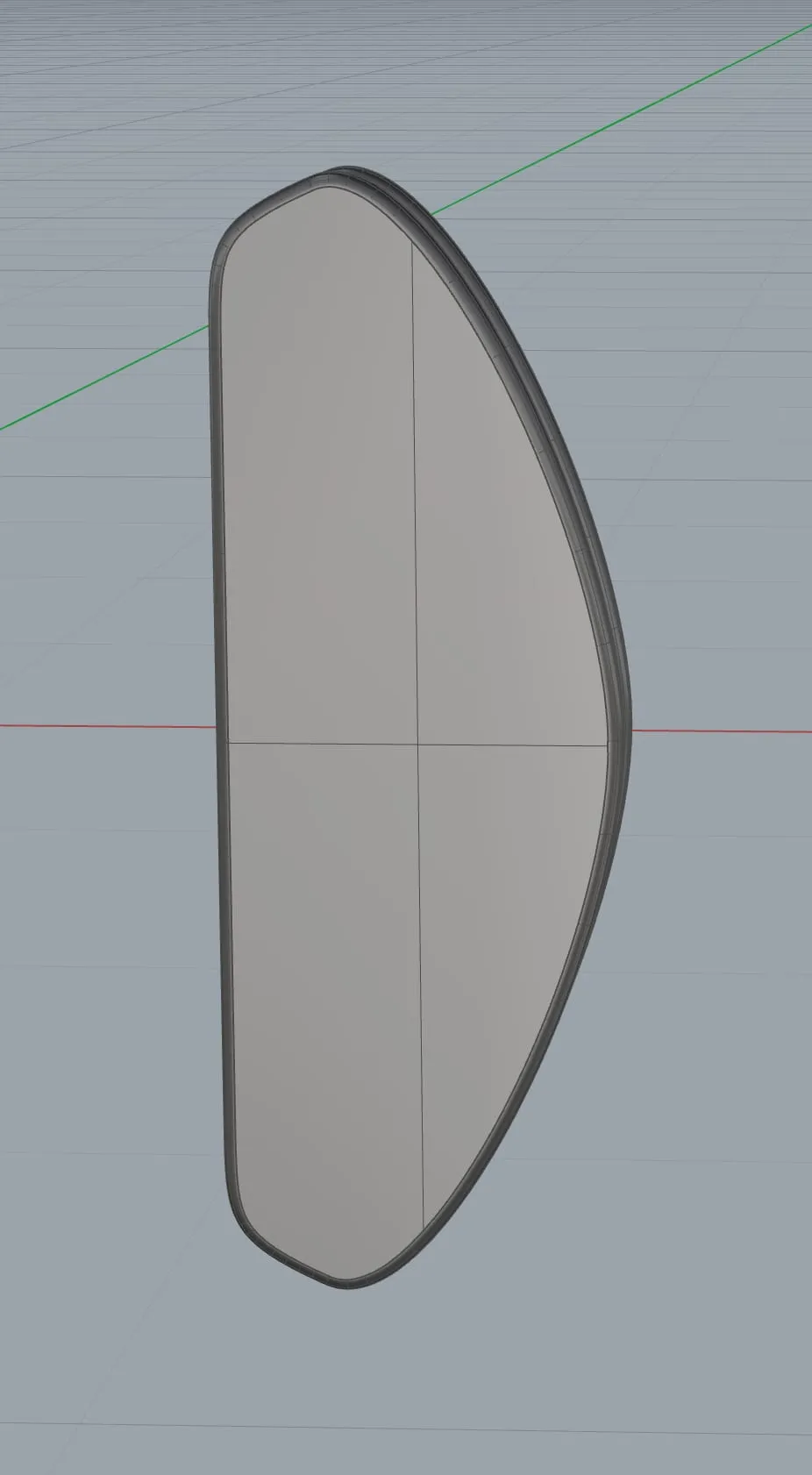
From there I worked on perfecting the shape and landed on a rounded isosceles. The aha moment was that rotating it gave us different shapes to work with, which would come in handy later. The same pad could sit differently in different frames, which left us some leeway for the eyewear we’d design in the future. And like the other symmetrical shapes, the left and right are still the same part.
Getting the softness and size right
Once we got into manufacturing, I worked directly with the manufacturer’s engineer on the softness of the rubber (its shore hardness). We had two contradicting goals: the pad should stay put for as long as it can, and it should be easy for anyone to replace when the time comes. It had to be soft enough to press into a harder plastic or metal socket and pull back out, but firm enough to stay in place and not wear out too quickly. Somewhere in between, it also had to be comfortable on a nose.
For the size, we looked at what was normal in existing nose pads, and at what Bex would most likely have in its future styles. The silhouette was pretty much settled by then.
Spares in the temple tips
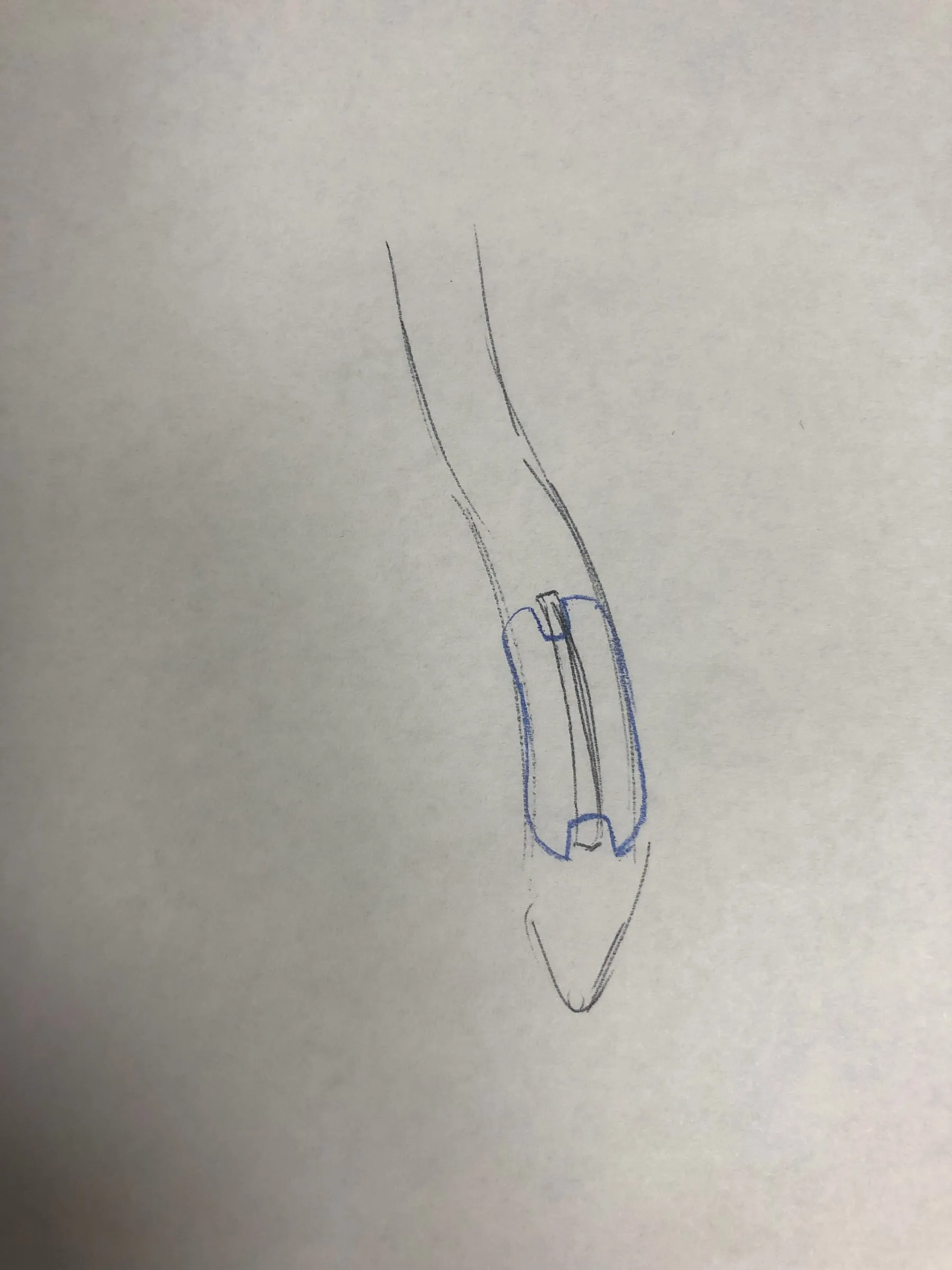
In the middle of R&D, the director had a eureka moment: what if every pair carried two more pads, one stored in each temple tip? It would show off how universal the pad was.
I was trying to keep parts and material to a minimum for sustainability’s sake, so I questioned adding spares. They also made the system more convenient, with a replacement always on hand. We checked that the triangle would go inside a temple tip, but didn’t settle on one temple tip design. Its silhouette can change with the style of the frame, so we kept it somewhat open-ended and gave our future selves options to design around. Being able to rotate the triangle gave us more ways to place it.
The leash
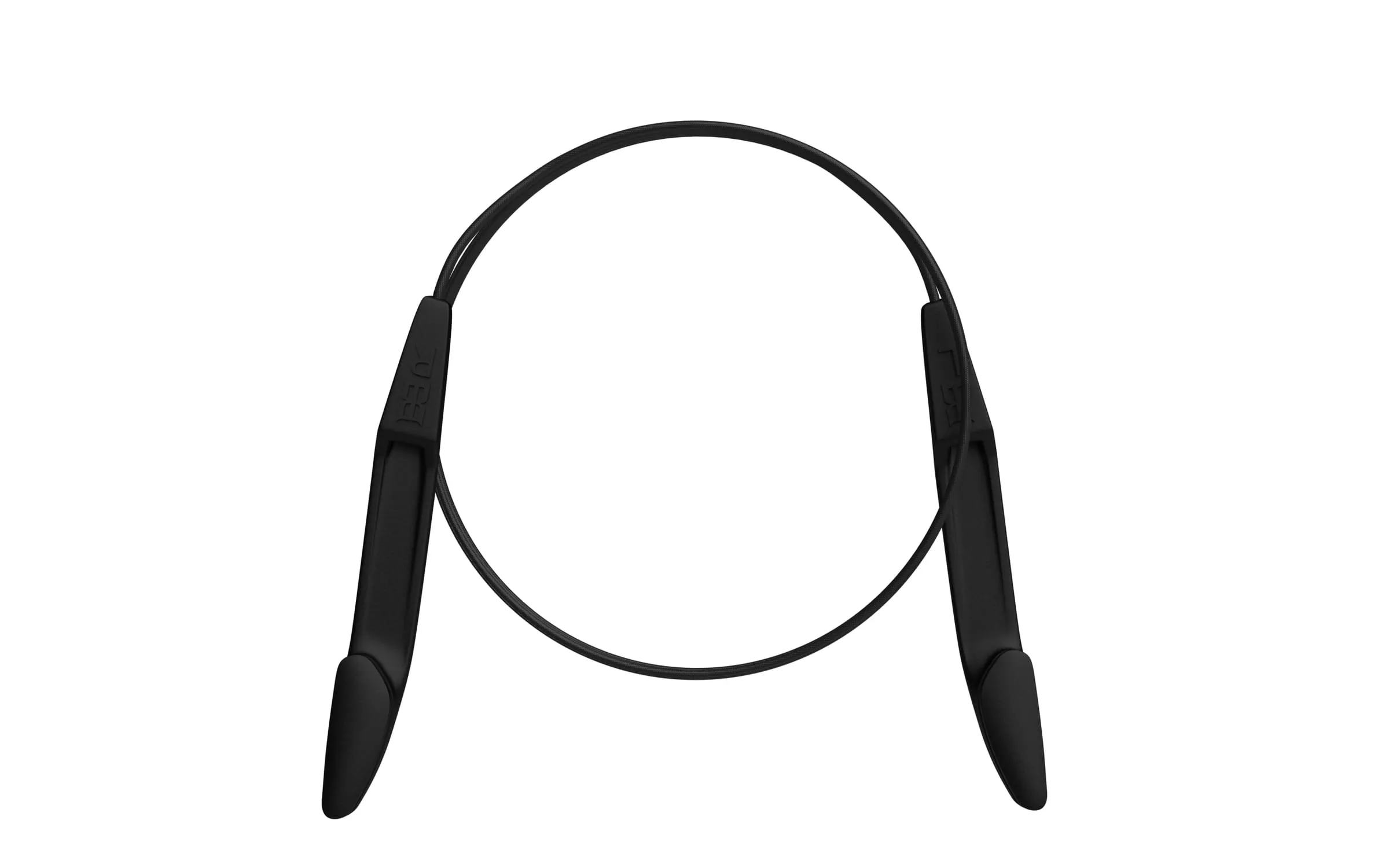
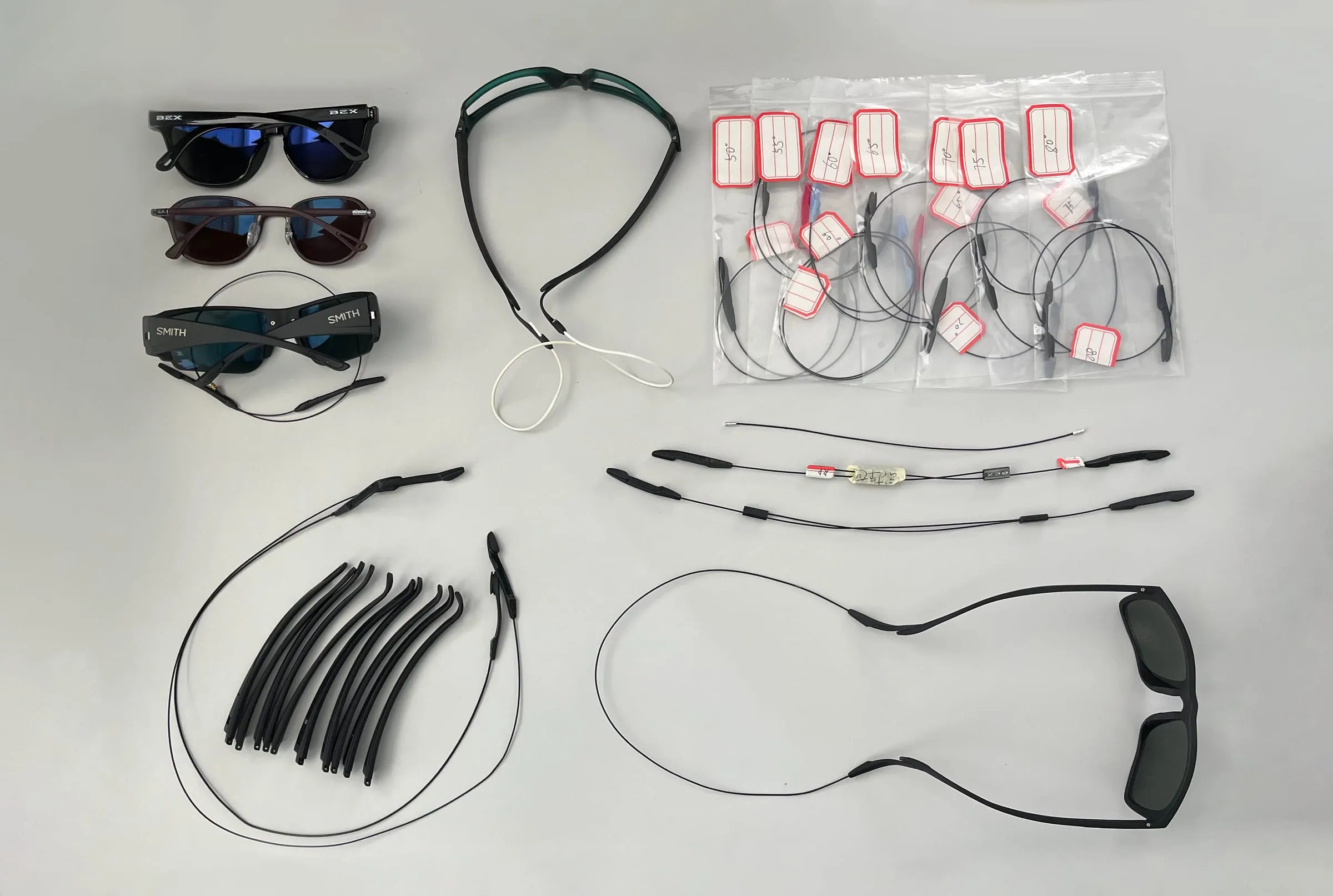
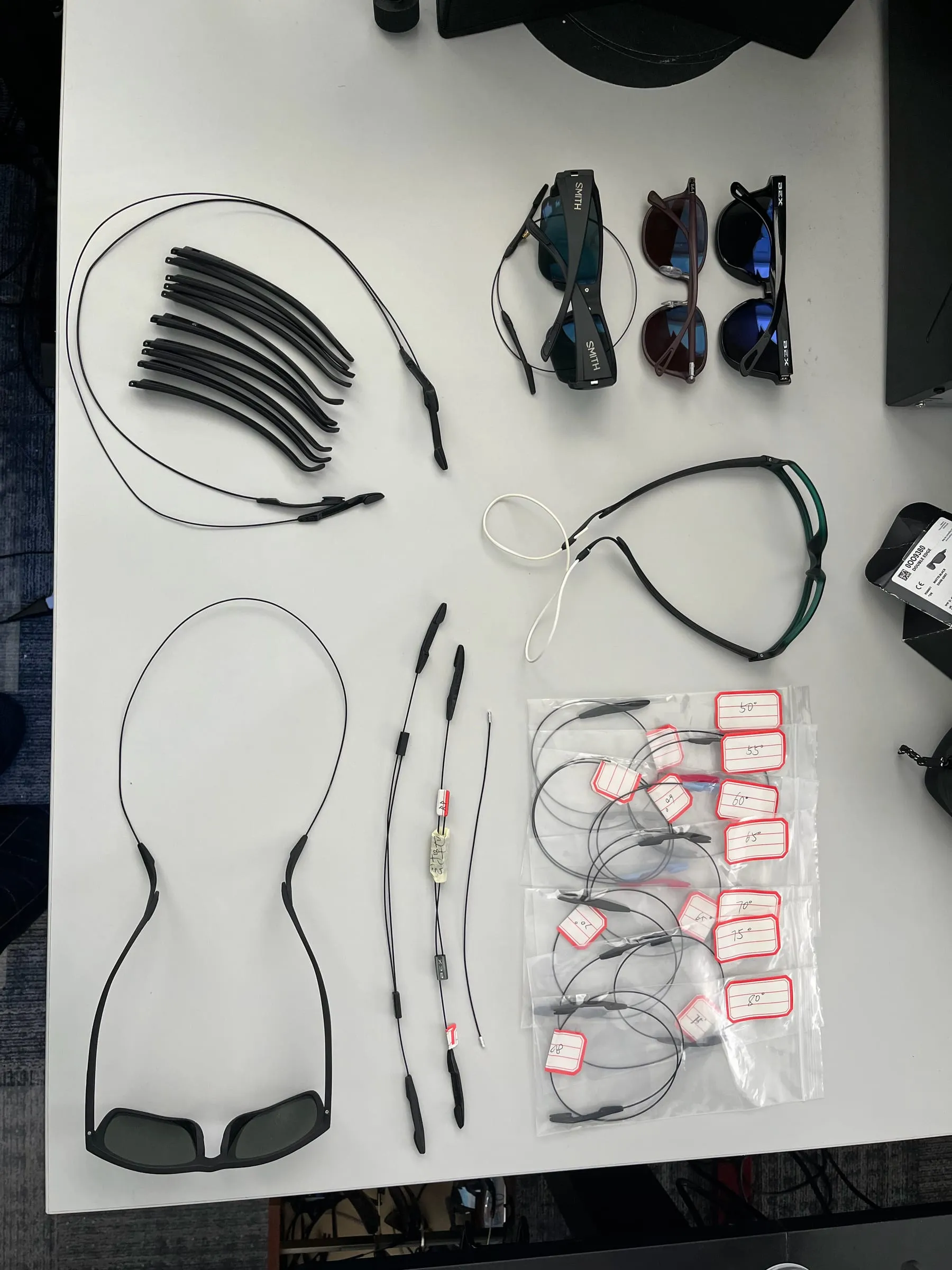
The temple tips gave us an opening for something else, literally: the same socket could hold an eyewear leash. People use them in sports like fishing, so they don’t lose their glasses. I started from the nose pad socket connection and built the leash from there. What looks like Bex, but is still simple enough to go with the different styles we might offer?
I worked directly with the manufacturer on the leash parts and how they go together. The leash ends needed their own shore hardness, since they have to hold the rope and get clipped on and off all the time.
A tool for replacing pads
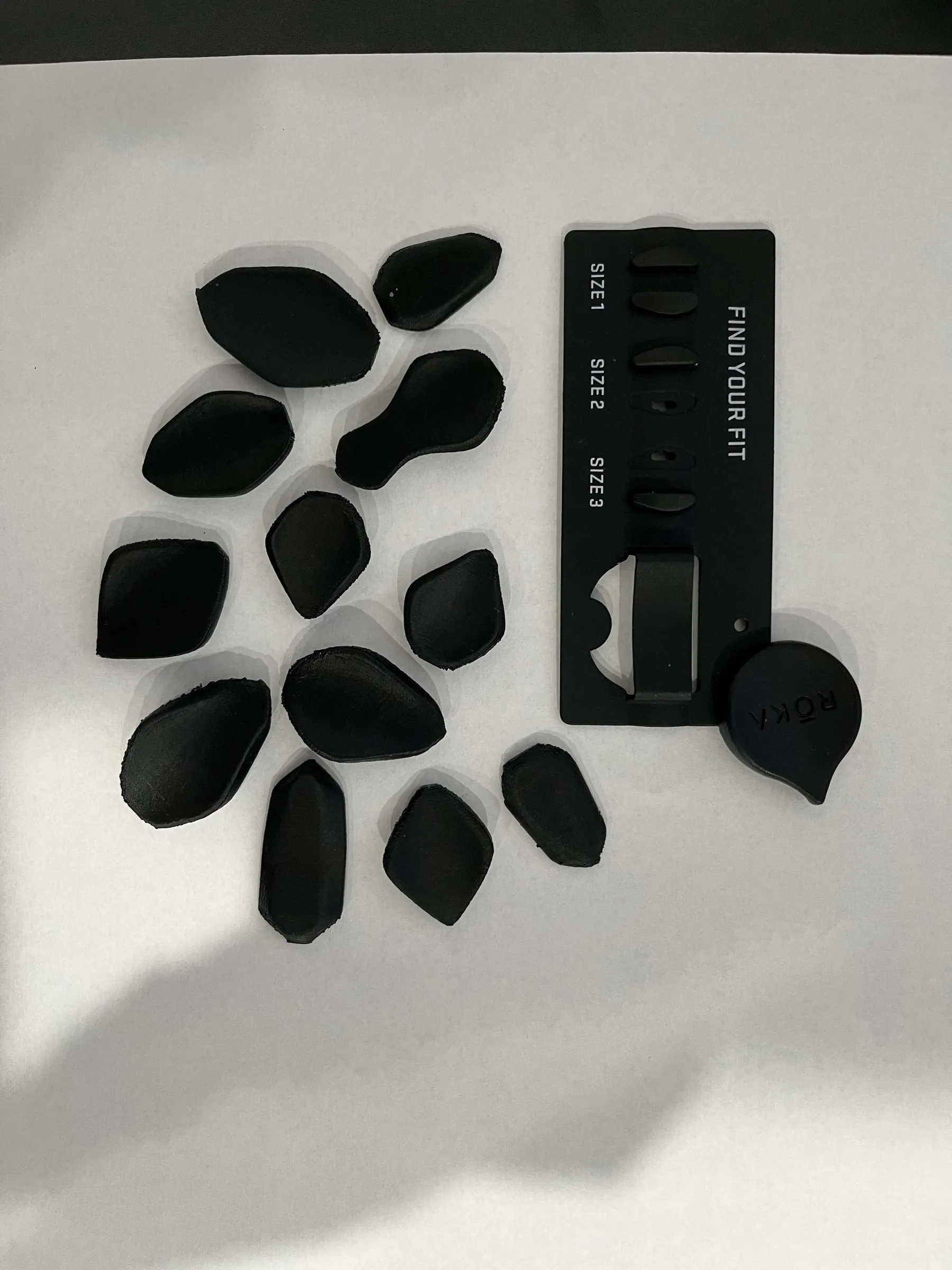
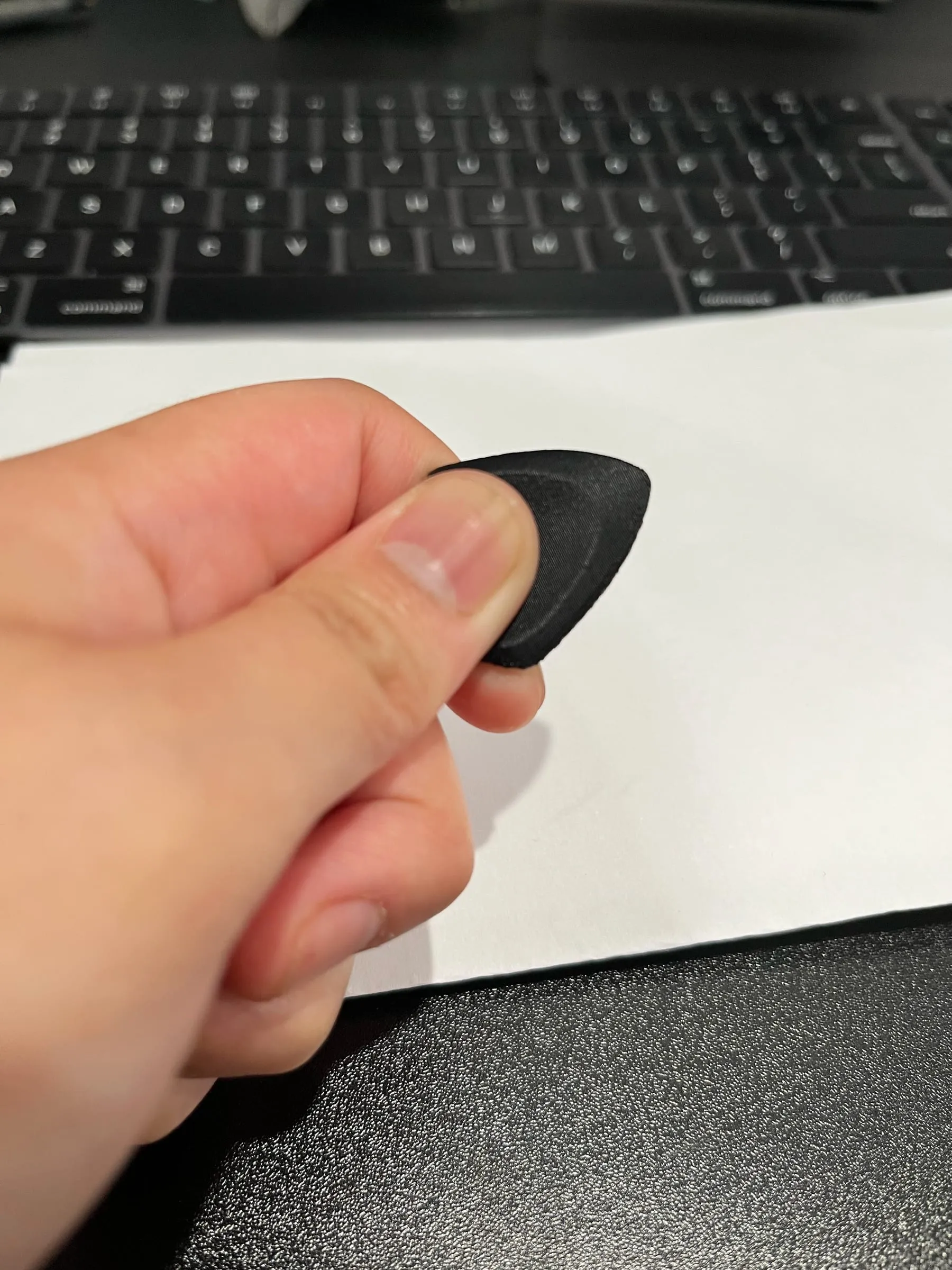
We designed the pads to be replaced, so people needed a way to take them out and put them back in. The pads are small, which is easier if you have small hands. Many of Bex’s customers have bigger ones, so we sketched and printed a little tool to help. We learned that it needed a point to push the pad into its socket, but not so sharp that it would damage the pad. It ended up looking like a guitar pick, in a shape that feels like Bex.
Four years later
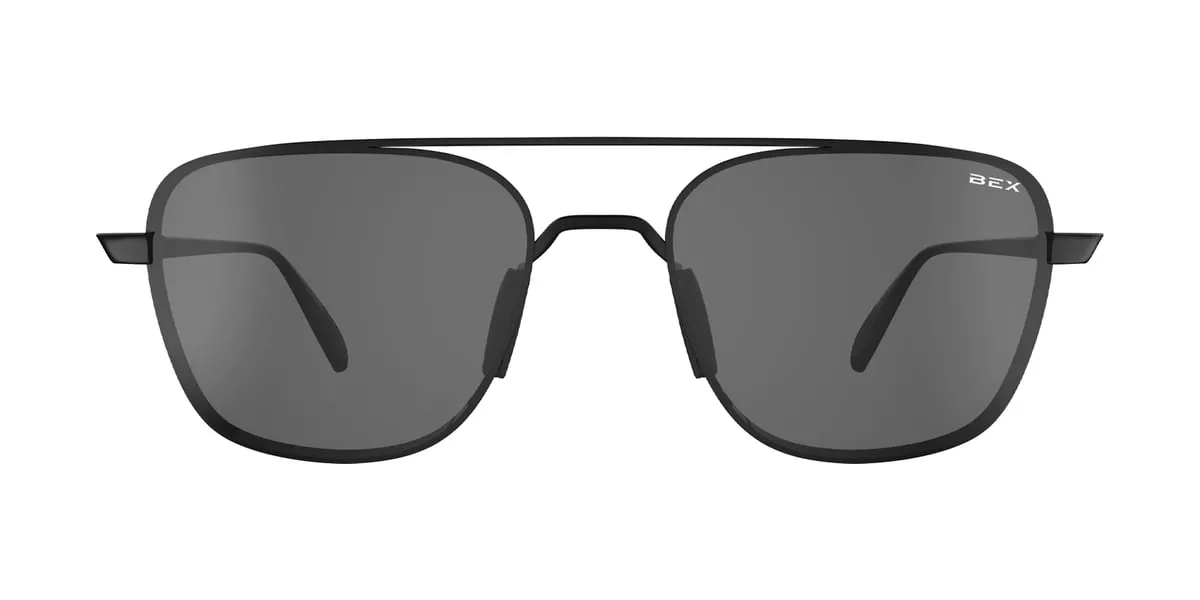
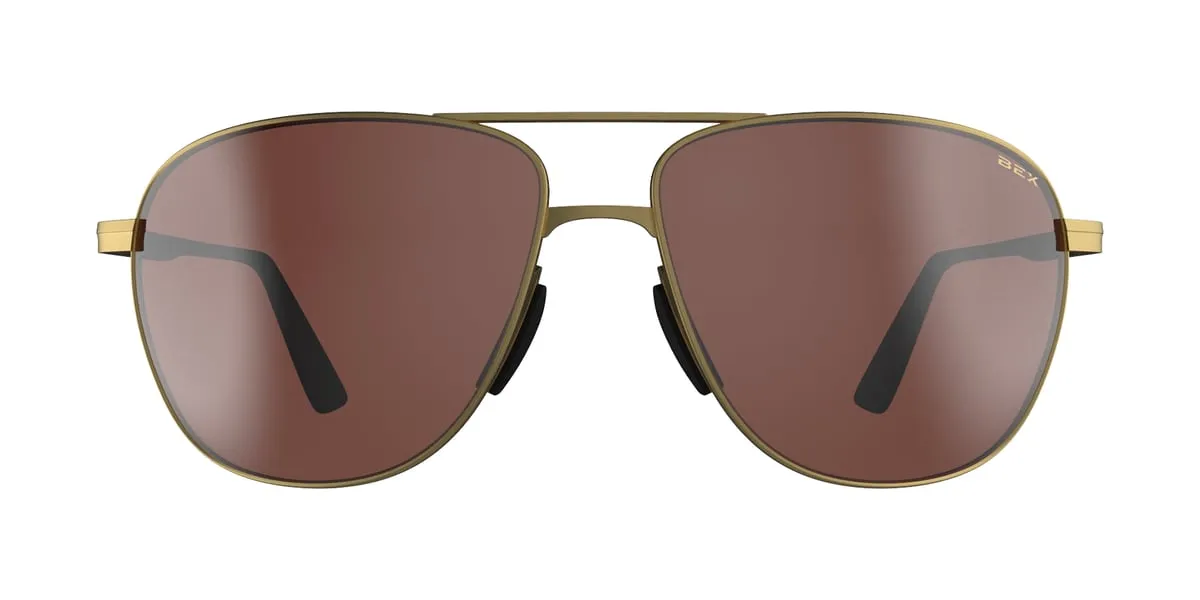
BUNP launched in December 2022 at the NFR / Cowboy Christmas in Las Vegas, on four new frames: Mach, Nova, Porter and Wing. I joined in February, and the whole system and those four styles had to be done by September.
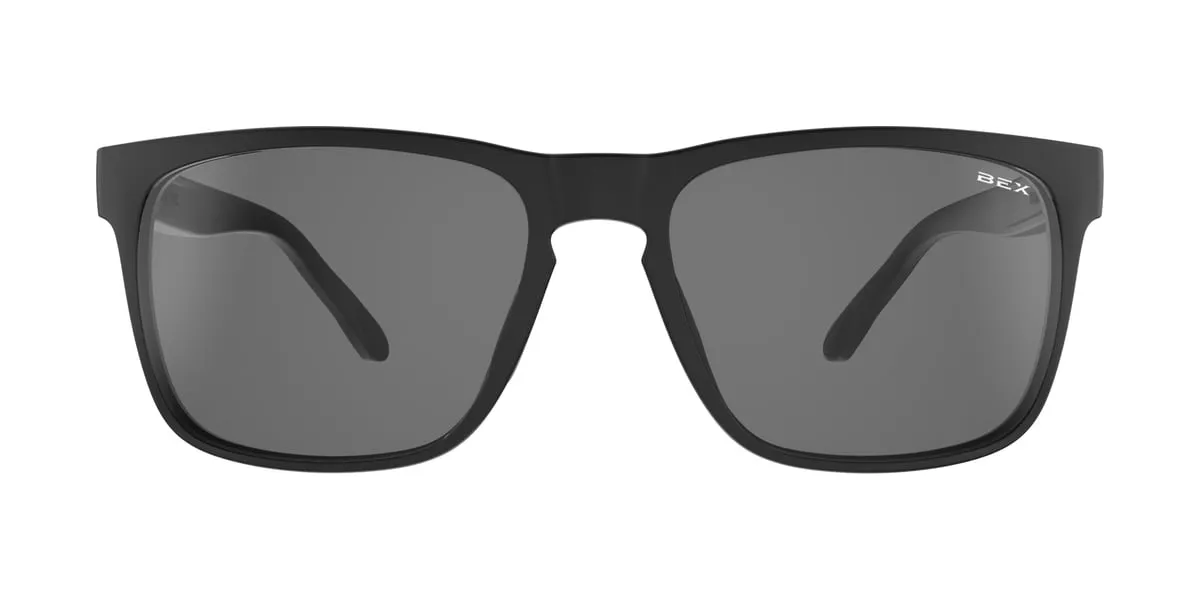
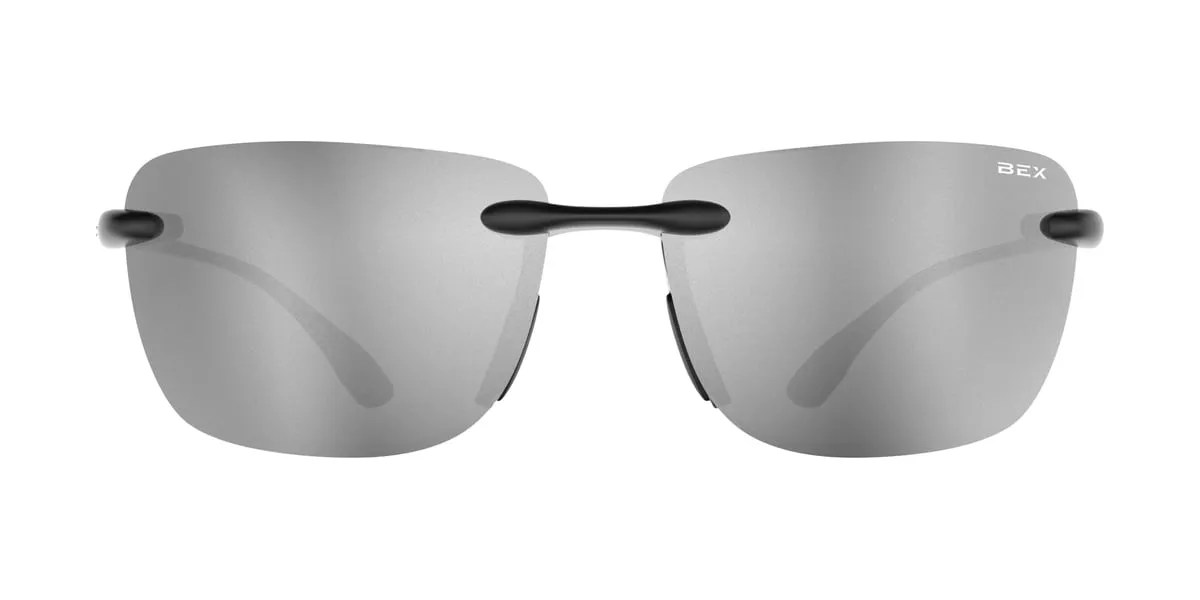
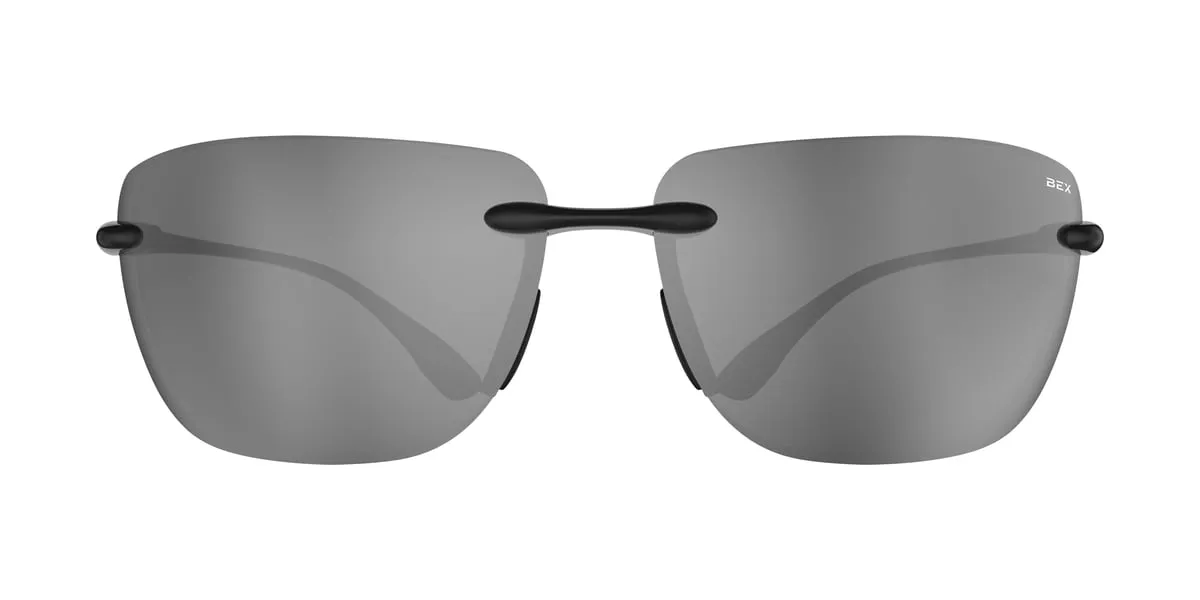
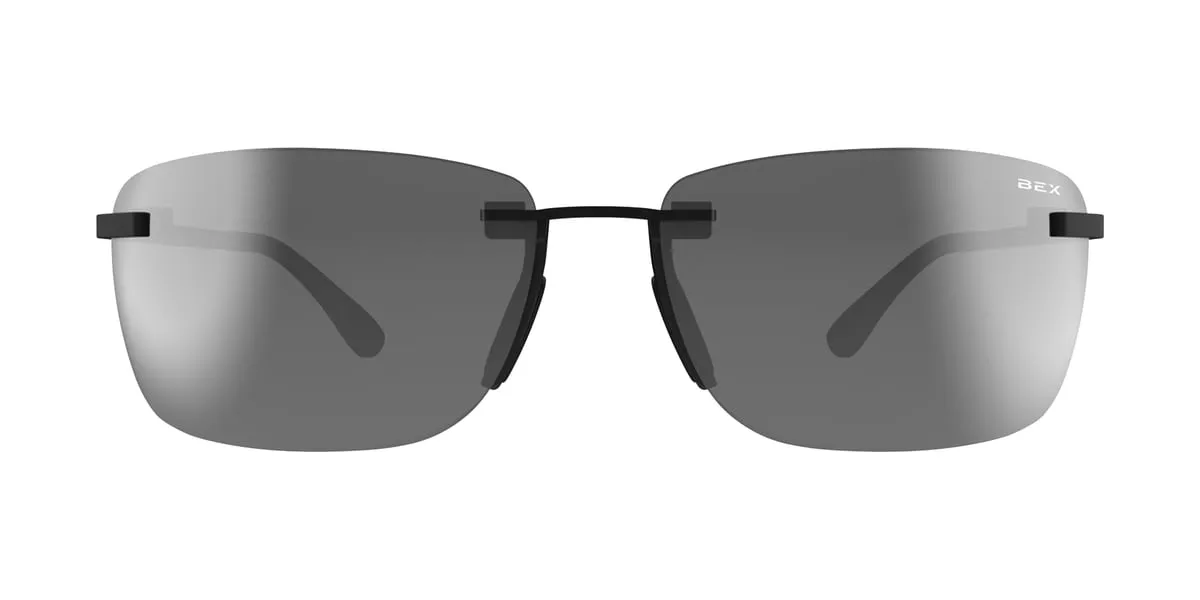
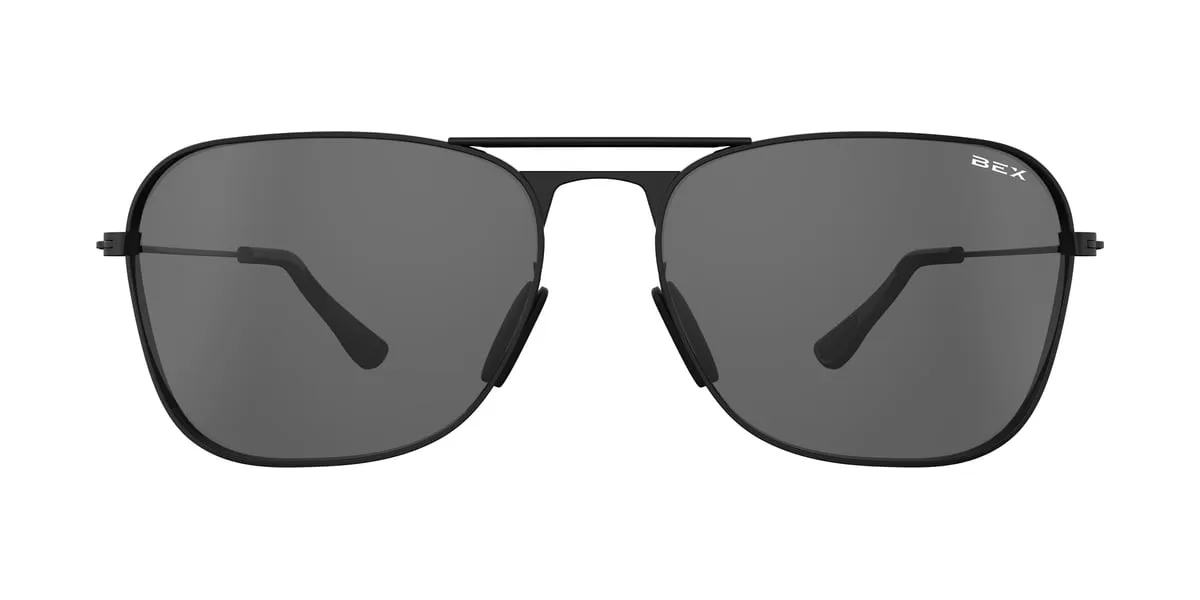
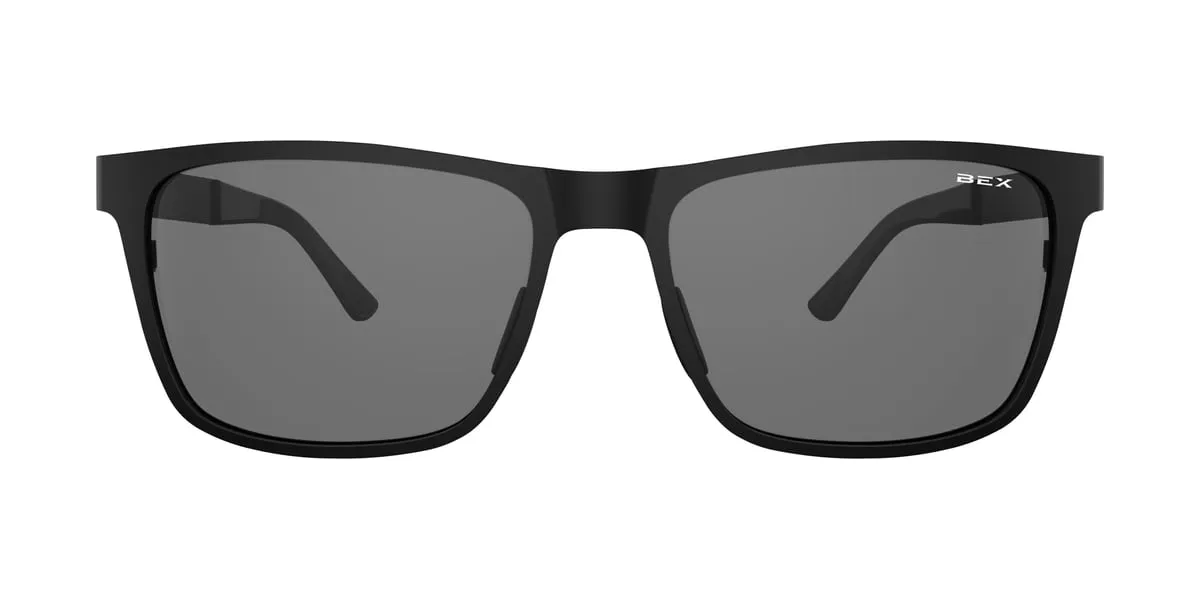
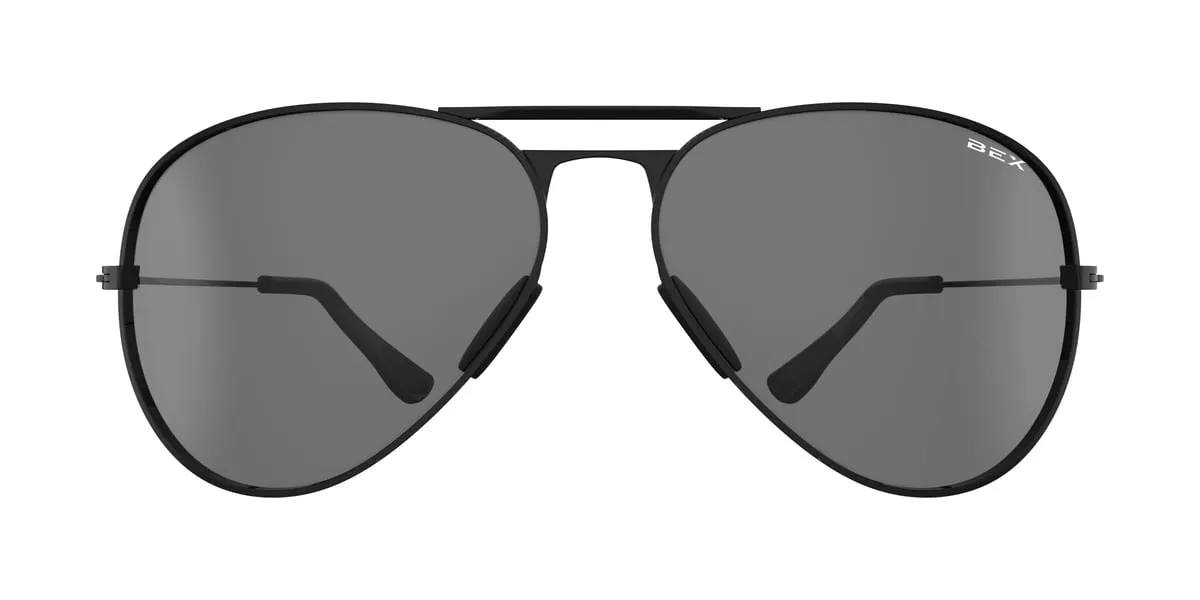
Since then, a lot of the eyewear my teammates and I designed has launched with the system. Twelve older styles were reworked to take it too. Of the 47 styles on Bex’s website, 44 now use BUNP, so customer service can send a spare pad instead of a brand-new pair.
-
 Mach
-
 Nova
-
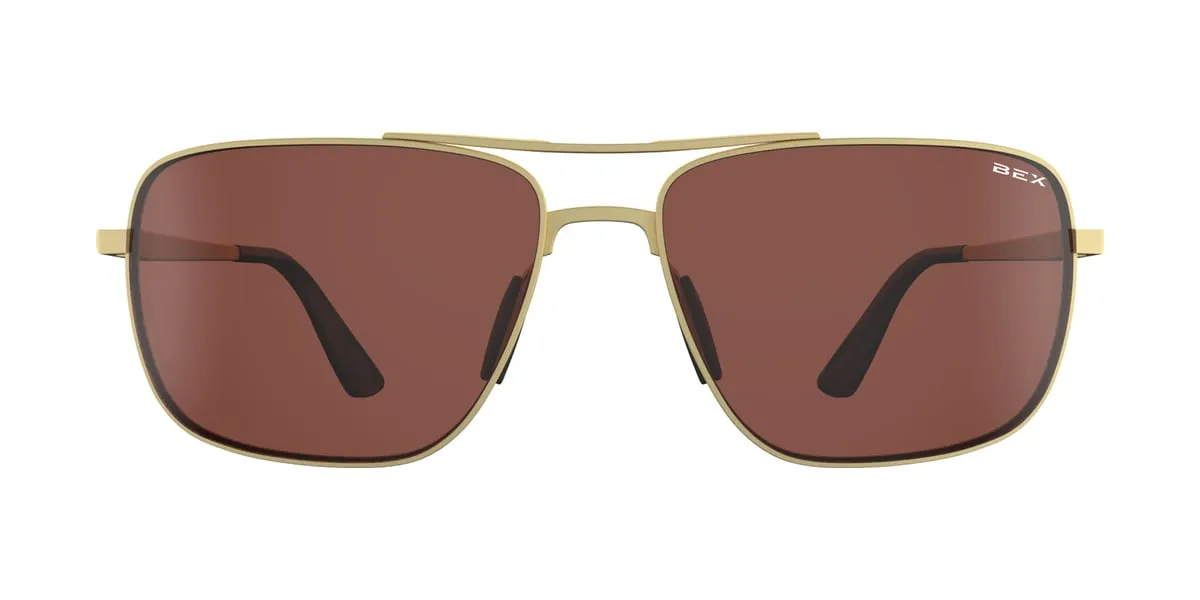 Porter
-
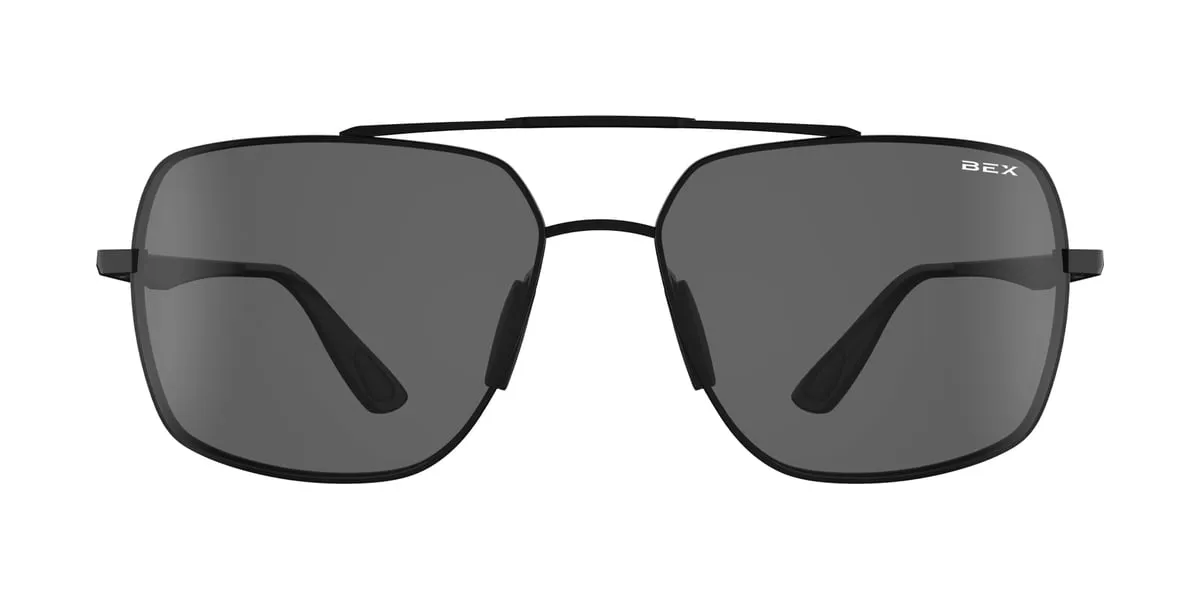 Wing
-
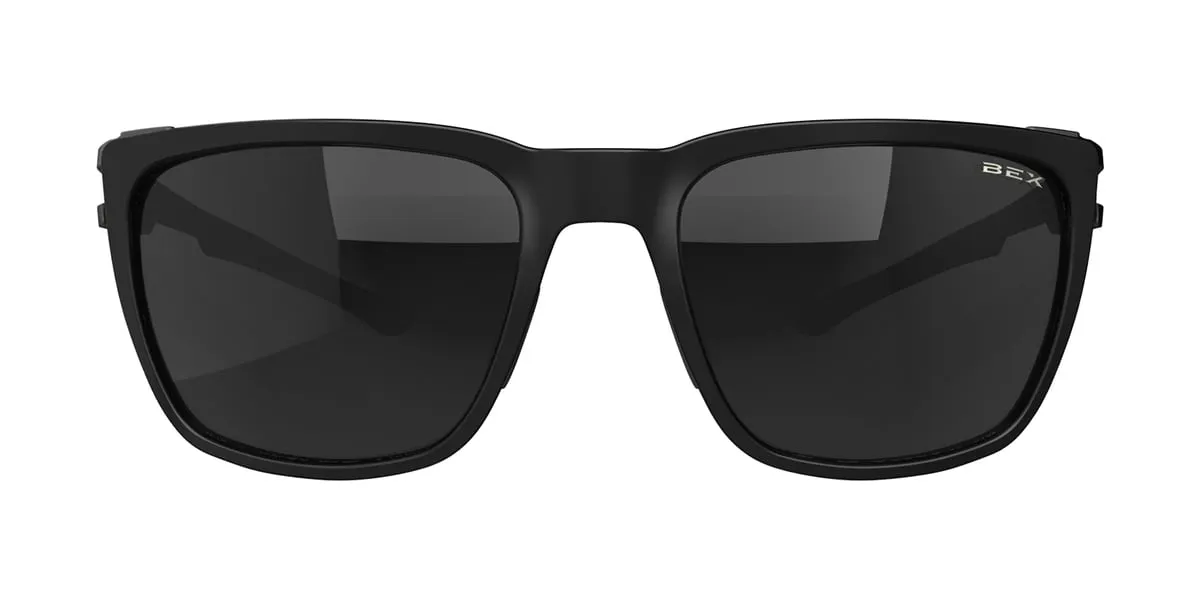 Adams
-
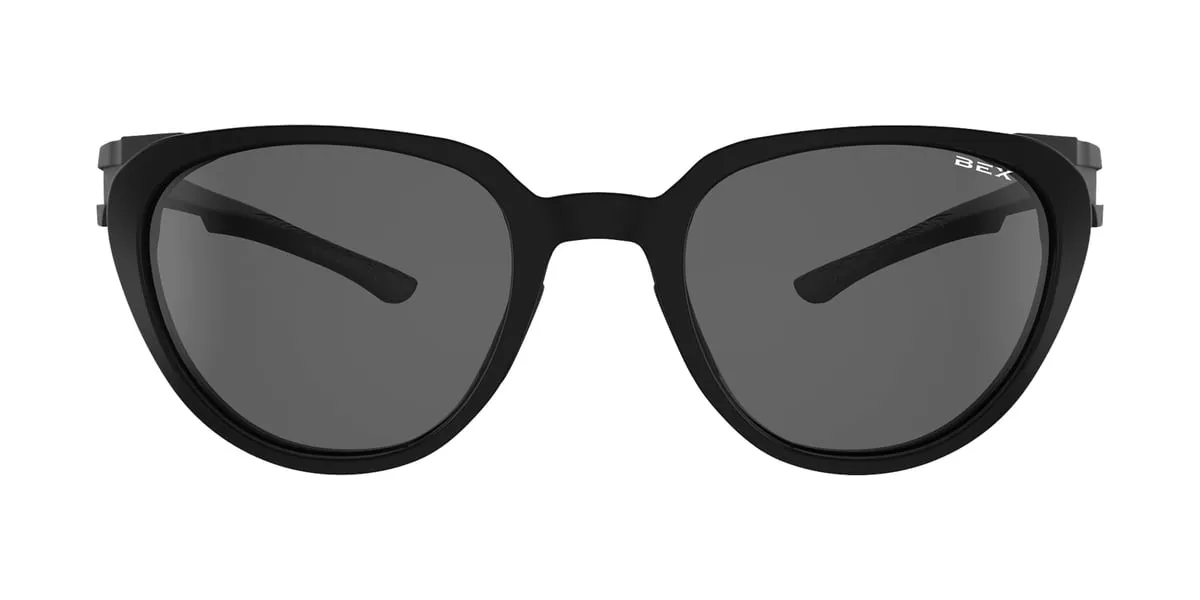 Lind
-
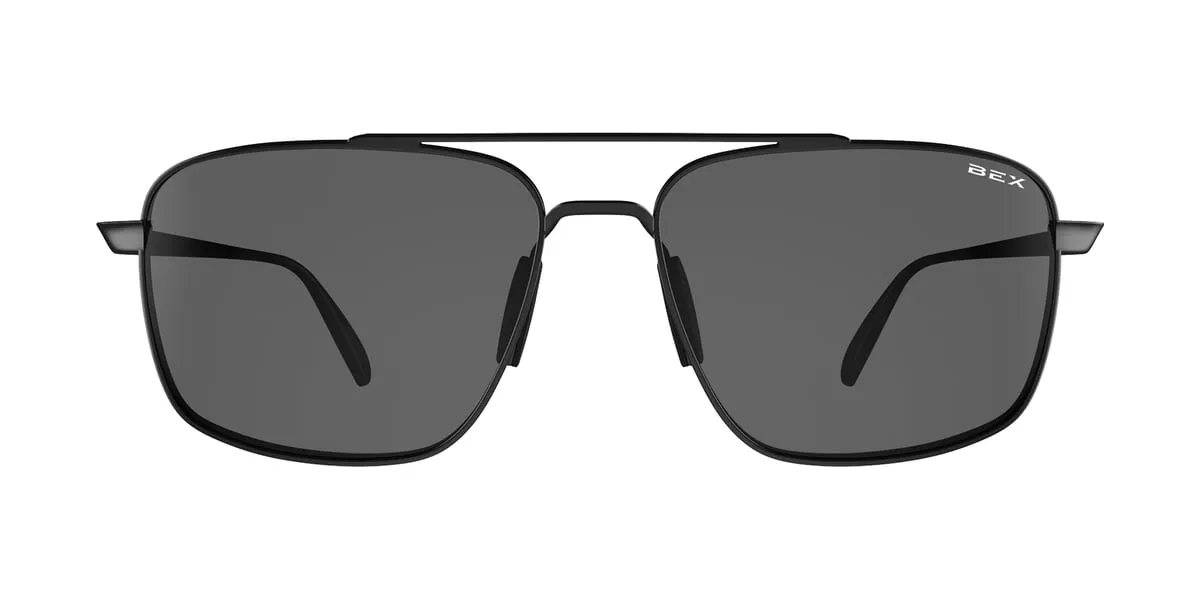 Accel
-
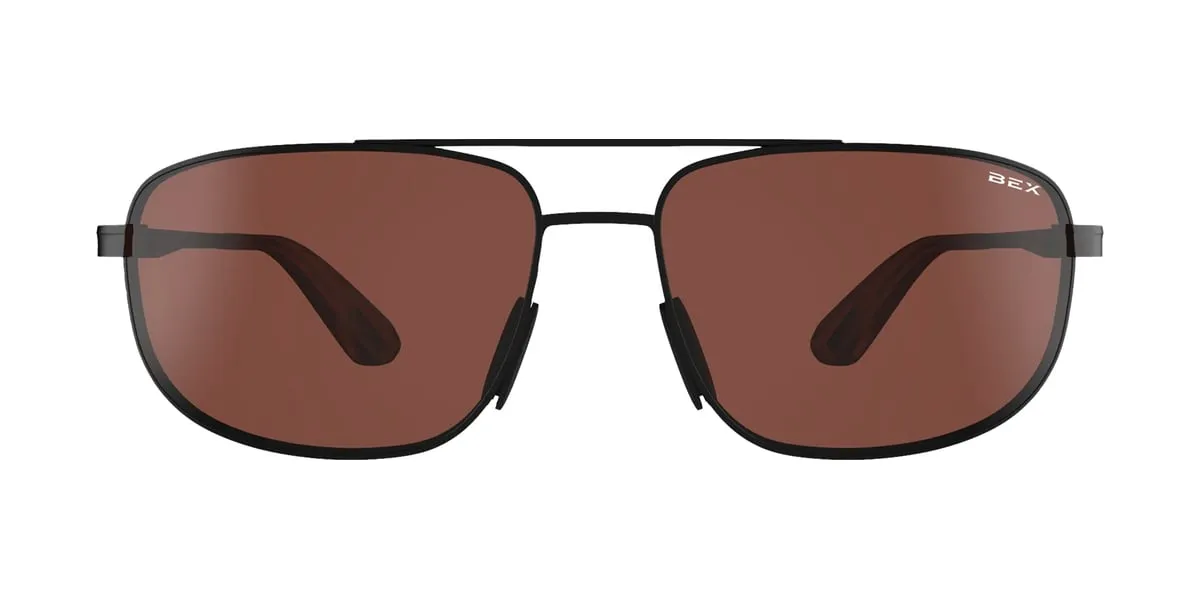 Talyon
-
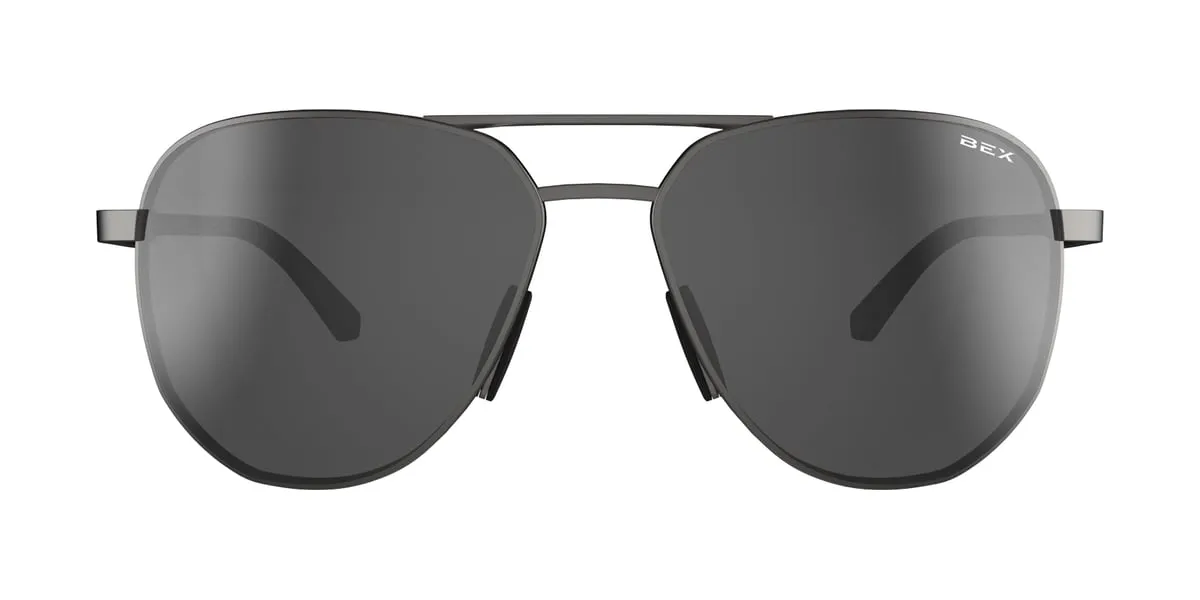 Welvis
-
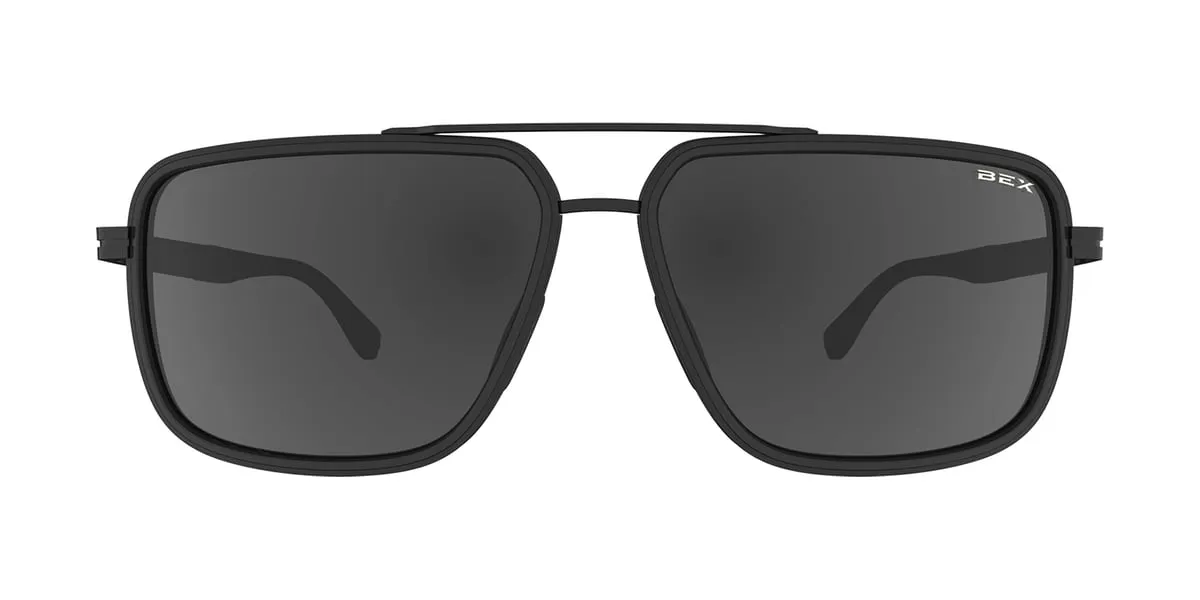 Dusk
-
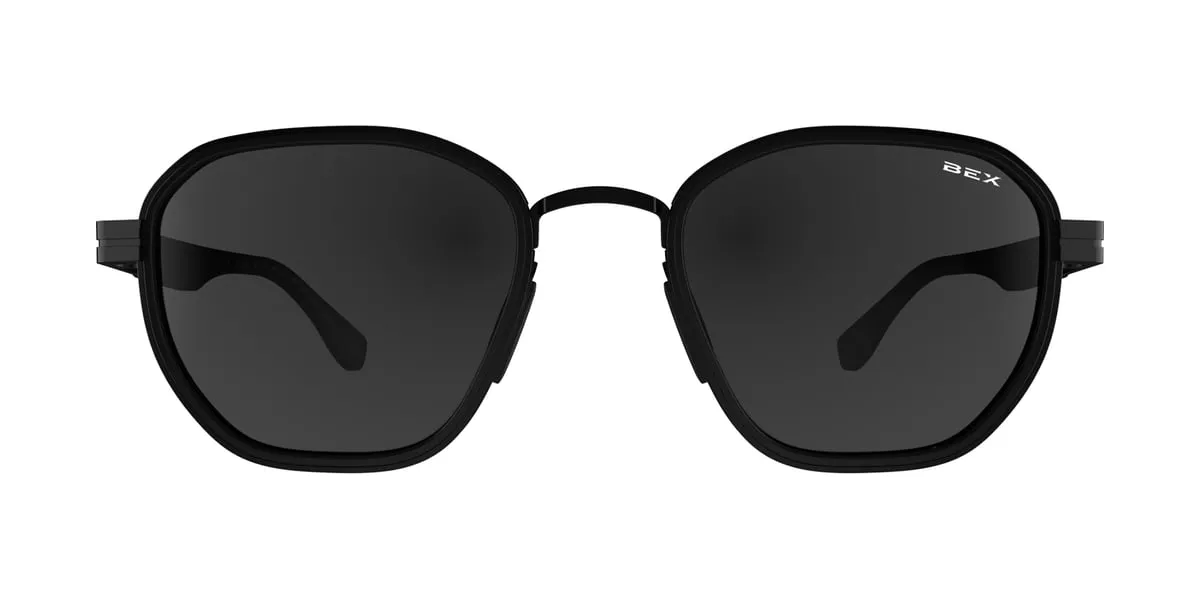 Sable
-
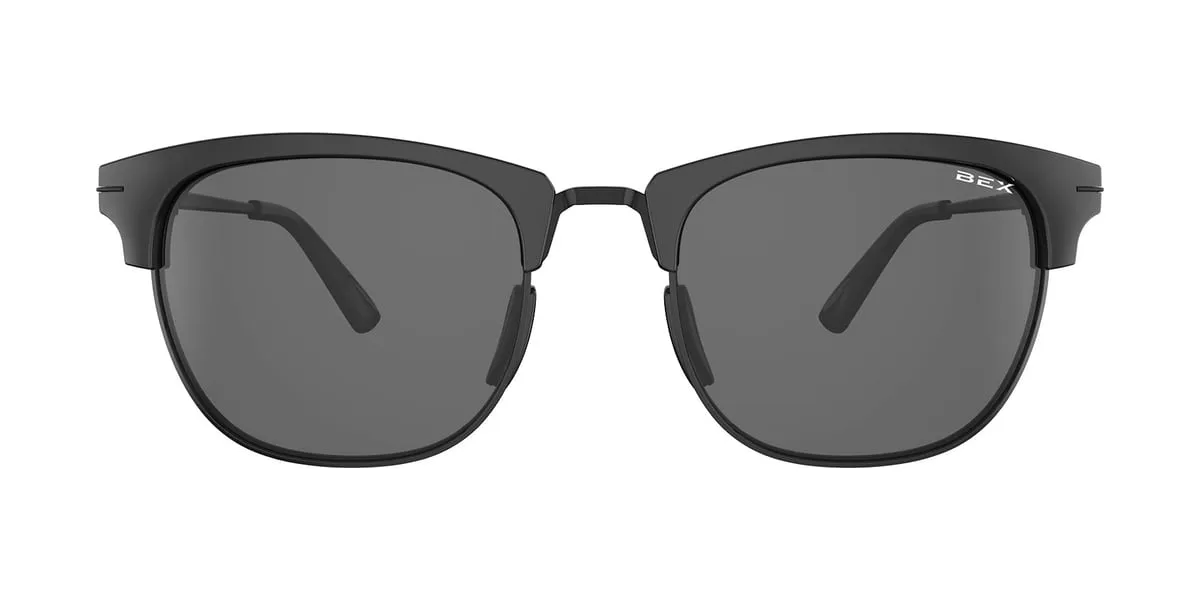 Knox
-
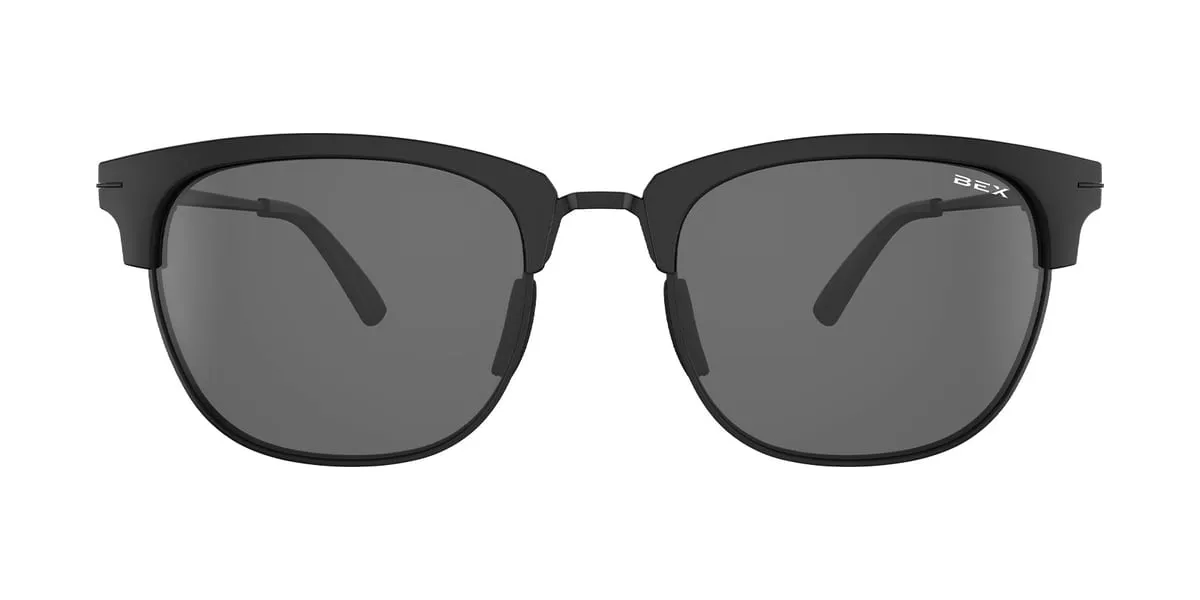 Knox XL
-
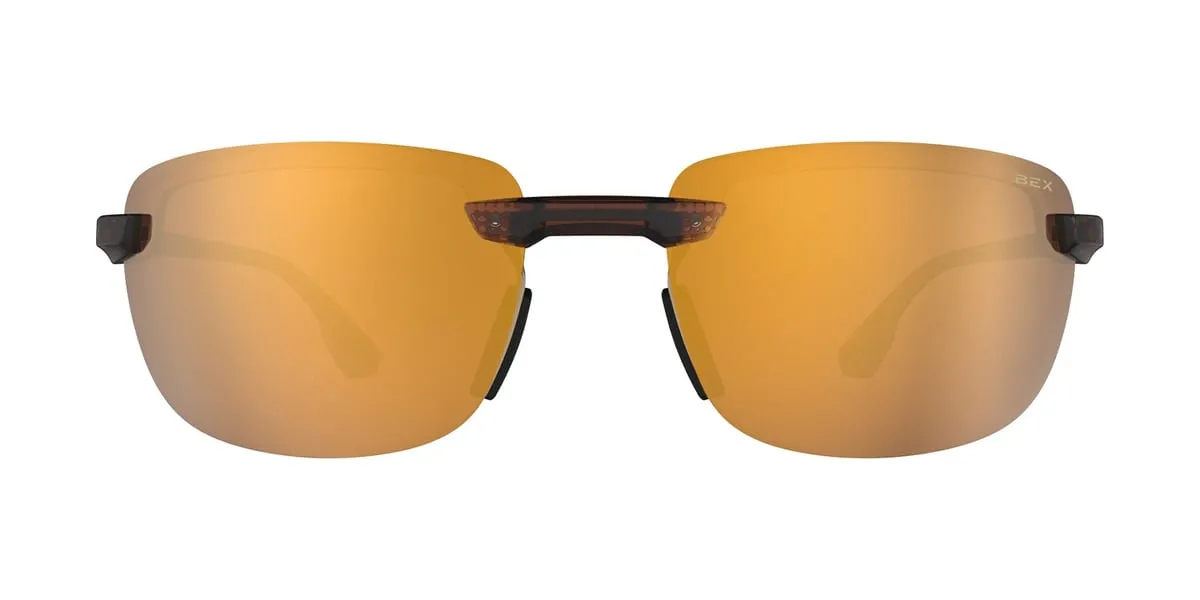 Ripley
-
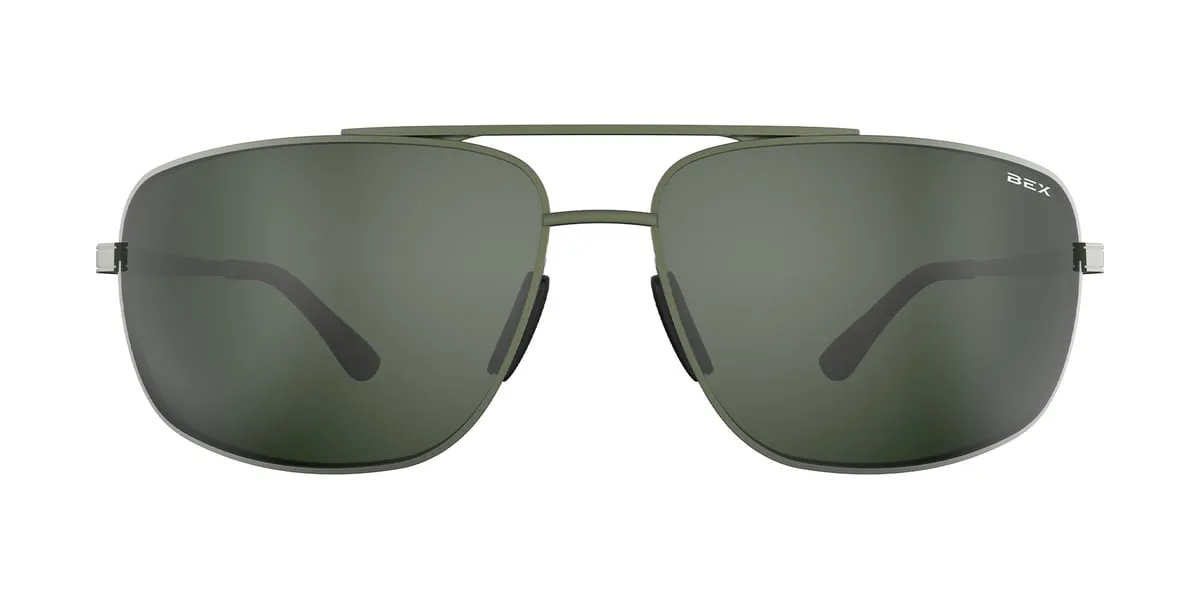 Gambit
-
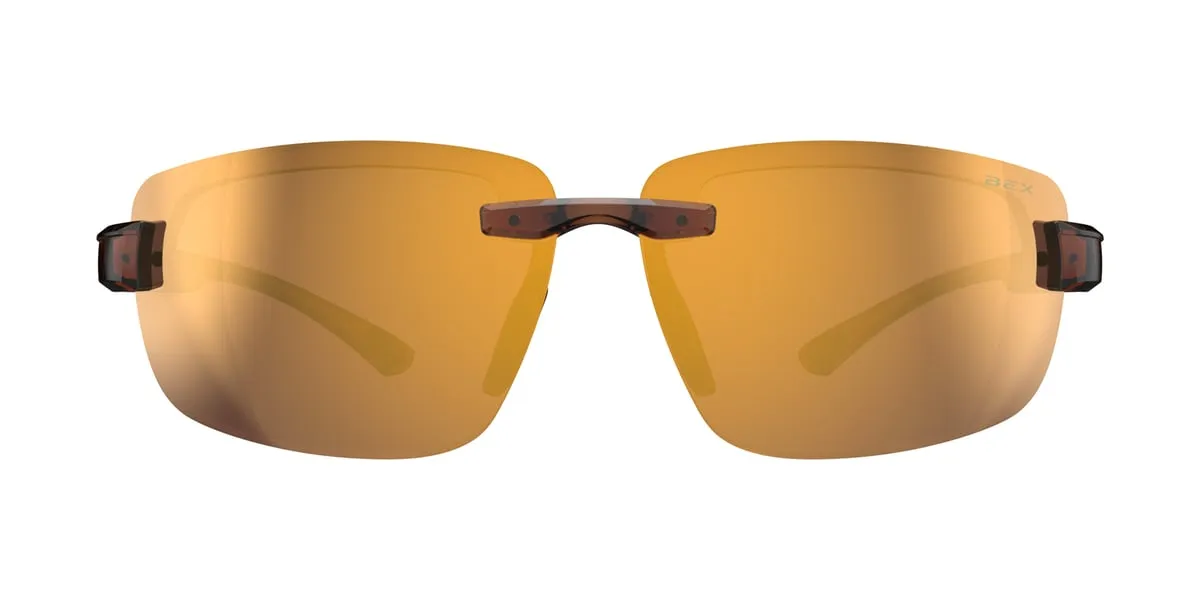 Harris
-
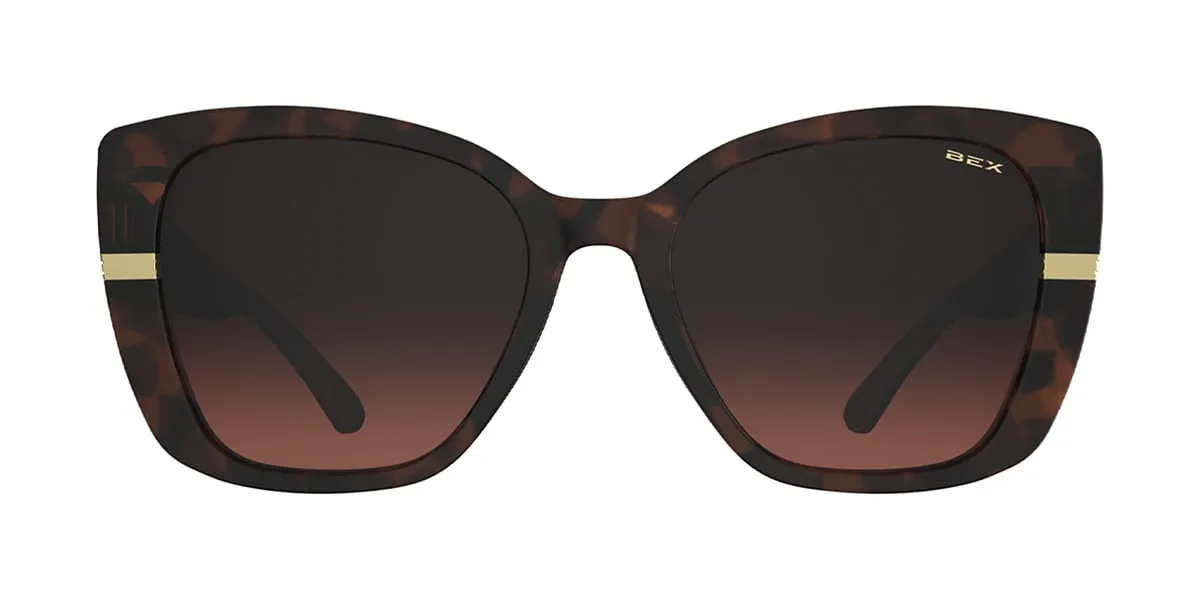 Anna
-
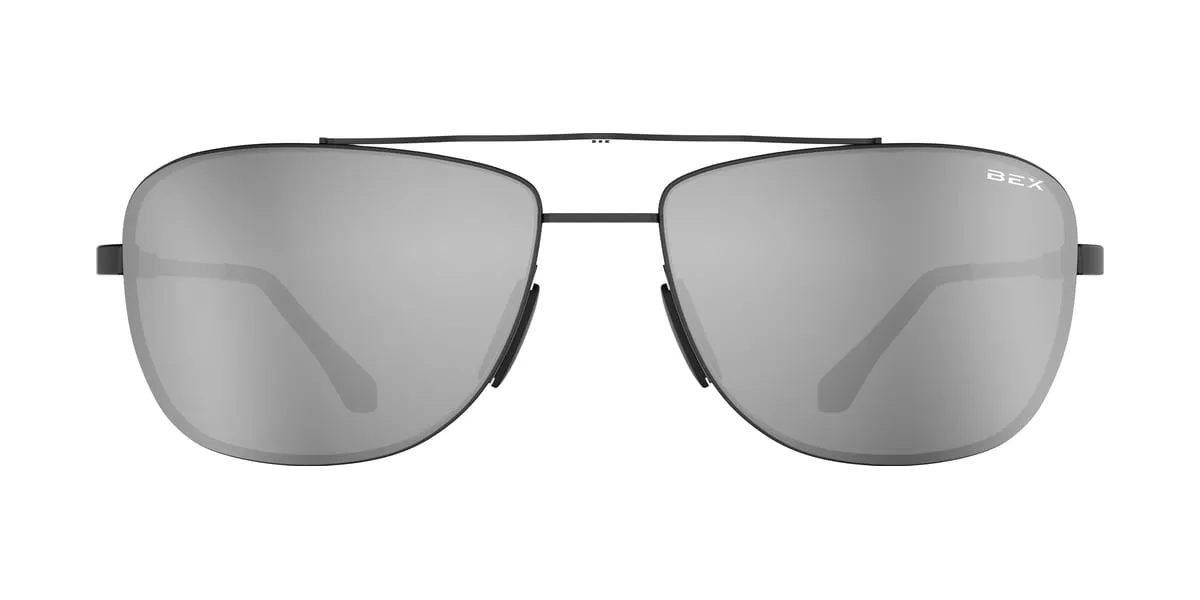 Draeklyn OTG
-
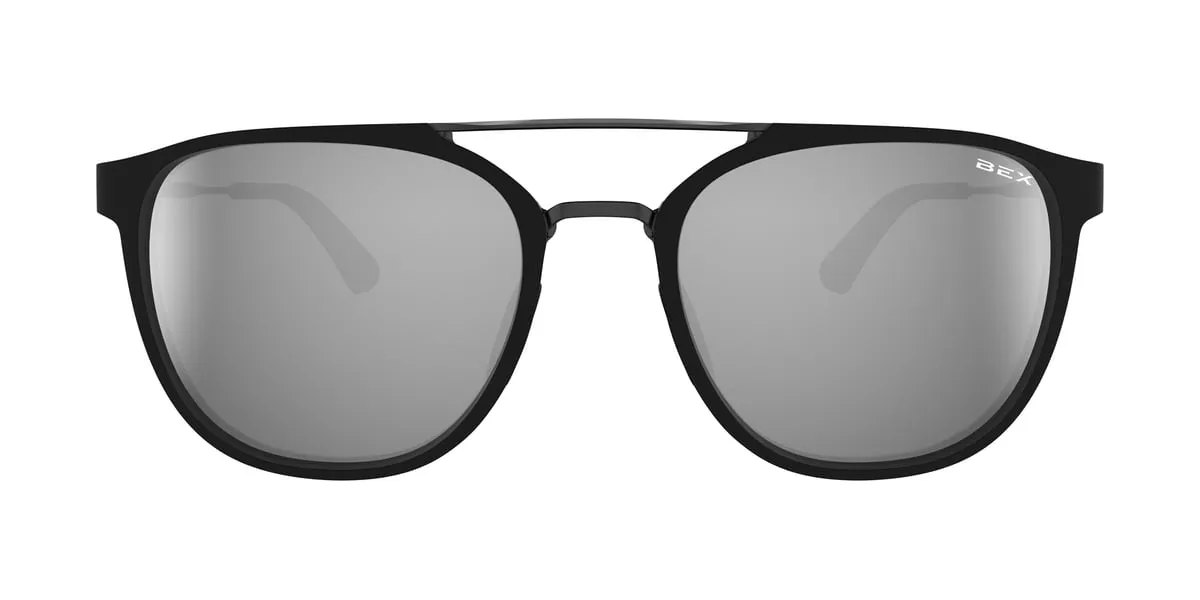 Dillinger OTG
-
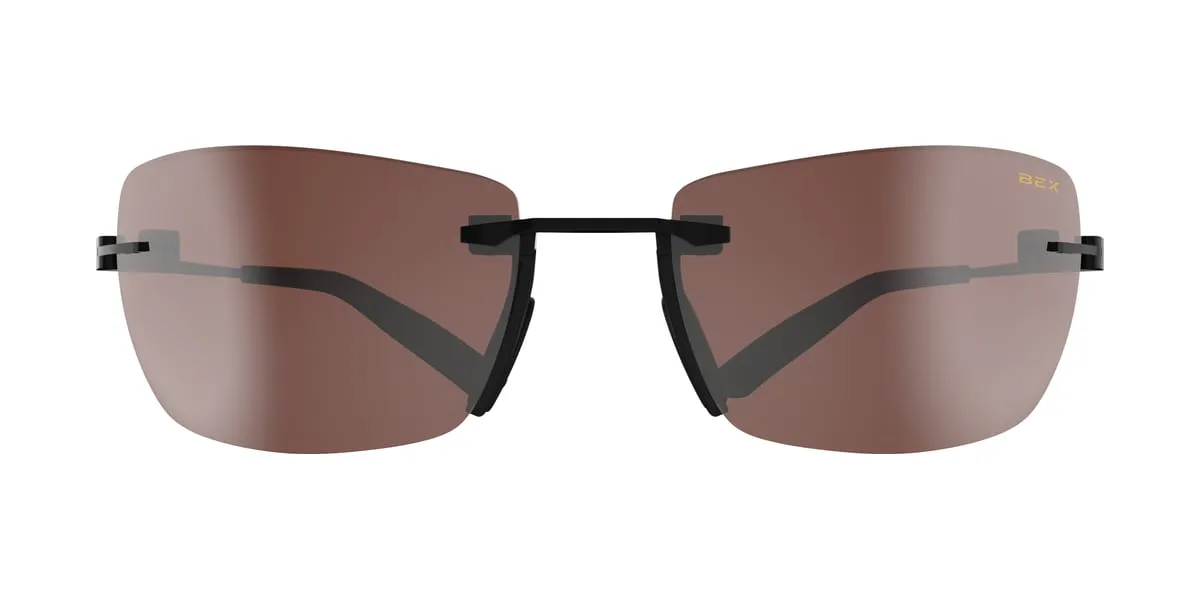 Fynnland X OTG
-
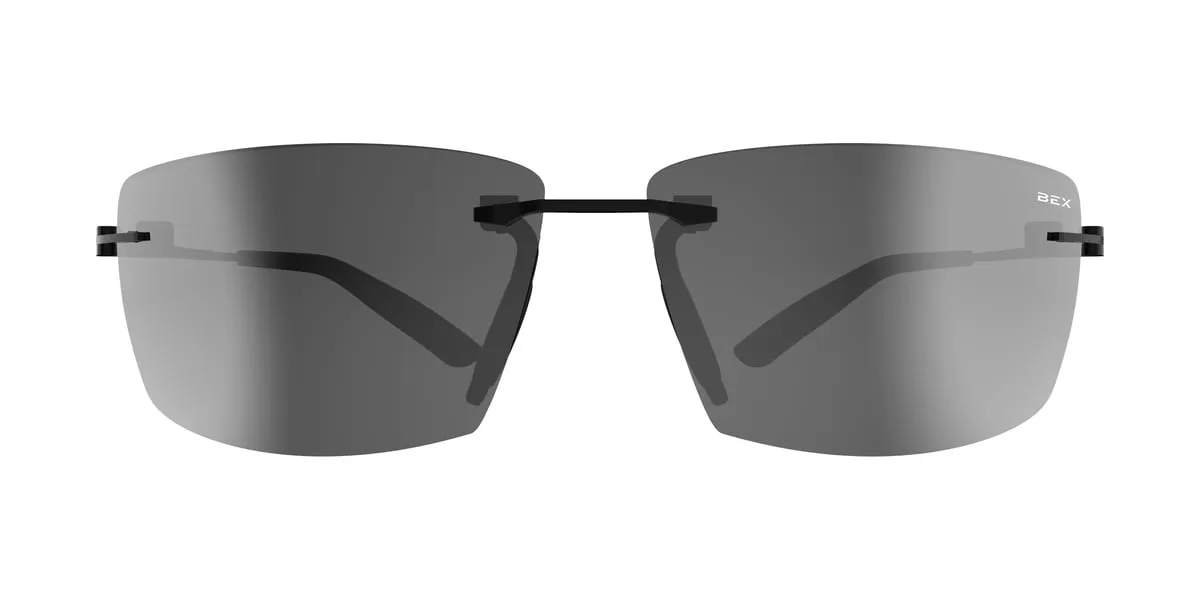 Fynnland XL OTG
-
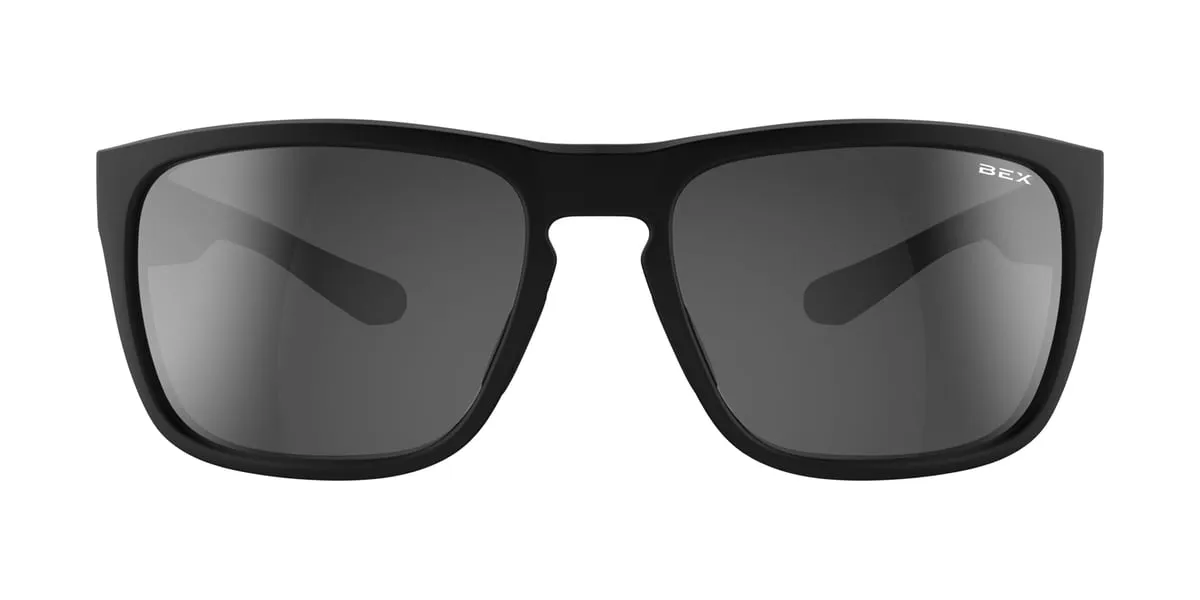 Jaebyrd OTG
-
 Jaebyrd X OTG
-
 Jaxyn X OTG
-
 Jaxyn XL OTG
-
 Legolas OTG
-
 Ranger OTG
-
 Rockyt OTG
-
 Wesley OTG
Looking back
Nose pads might seem negligible. They’re not what makes glasses fashionable; they’re almost purely functional. We designed this with function first, and I pushed for comfort wherever I could. If I did it again, I’d give comfort and fit across different faces even more room, ideally with more than seven months for a part that goes on every frame a brand makes. Still, the younger me did the best she could with the skills she had.
Frame photos: Bex.